
As we age the need to maintain our physical health is becoming more important. One key aspect to staying healthy is being flexible. Many people believe that strength is about lifting weights or performing intense workouts, but flexibility plays an important role in keeping you strong, especially when we get older.
Being aware of the importance of flexibility will help us in staying active, avoid injuries and enhance the overall quality of life.
1. Importance of Flexibility for Aging Bodies
Flexibility refers to the capacity of joints and muscles to move freely through their entire movement. As we get older, our muscles become tighter and joints stiffen. This can make it difficult to complete simple actions like bending backwards or reaching for something or even walking with ease. When our bodies become less flexible it is more prone to suffer from joint pain, muscle strains or even slips.
By focusing on the importance of flexibility, we can maintain the strength to move easily and freely. Flexibility helps muscles to remain in a relaxed state and reduces the risk of injury. It also helps in maintaining a proper position, important for stability and balance which makes it easier to carry out every day tasks.
2. Flexibility and Strength: How They Work Together
A lot of people don’t know how much flexibility is connected to strength. If we don’t have enough flexibility, it is difficult for our muscles to work correctly. When muscles are tight they’re less efficient, which can cause muscle imbalances, and can make certain workouts more demanding.
For example, if your hamstrings have tightness, then you might be unable to lift weights, or even walk far distances without discomfort. Concentrating on exercises that improve flexibility for seniors will ensure that the muscles are flexible and strong. This will allow for greater fitness development as muscles are able to move more efficiently when exercising. When you incorporate stretching exercises into your workout routine it helps your body remain active and able to handle diverse physical tasks as you get older.
3. Benefits of Flexibility Exercises for Seniors
- Improved Range of Motion: As we get older, our joints and muscles tend to get less flexible. The exercises allow flexibility to keep them in motion and allow you to carry out everyday tasks such as lifting, and bending without stiffness or pain.
- Prevents Injuries: The muscles that are tighter are more susceptible to injuries. If you include stretching exercises into your daily routine to reduce the chances of strains, sprains as well as muscle tear. This is crucial for those who are more vulnerable to falls or other incidents.
- Better Posture: Poor posture can cause neck pain, back pain, or even headaches. Exercises to improve flexibility can help improve posture by ensuring your spine’s muscles remain balanced and sturdy.
- Increased Circulation: Stretching and flexibility exercises increase blood flow to your joints and muscles, which helps in recovery and reduces soreness in the muscles. This is especially beneficial following the training for strength or any other exercise.
- Reduced Tension and Stress: Exercises for flexibility like gentle stretching or yoga, can calm your mind and decrease tension within the body. This could lead to less muscle tension, better relaxation, and better sleeping.

4. Top Flexibility Exercises for Seniors
If you’re looking for ways to improve your flexibility and remain healthy, here are simple exercise routines for seniors that can be performed at the home or in an exercise routine. These exercises are easy and can be adapted according to the level of fitness.
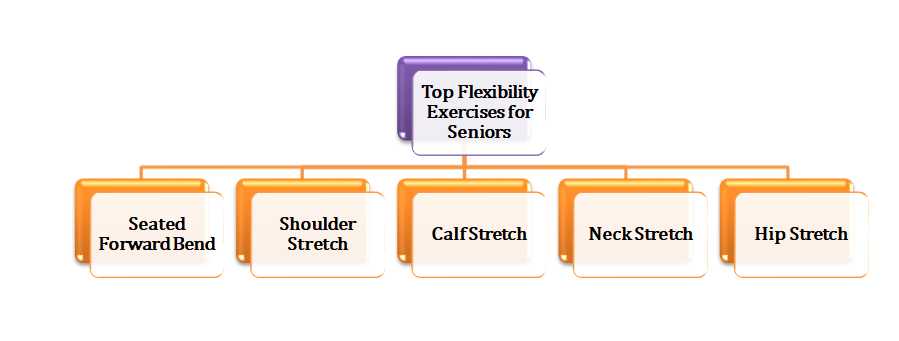
- Seated Forward Bend: Sit in the chair, with your feet laid flat on the floor. Slowly bend your hips forward by extending your hands towards your feet. Maintain this position for 10 to 15 seconds, and then sit back up. This stretch improves the flexibility of your back & the hamstrings.
- Shoulder Stretch: Sit or stand upright. Spread an arm in front of your chest. Use the other hand to gently draw the arm closer to your body. Keep it for 10 to 15 seconds, and then switch arms. This stretch helps improve shoulder mobility, and also helps to prevent stiffness.
- Calf Stretch: Sit in front of a wall and place your arms resting on the wall to provide support. Move one foot backwards while keeping your heel on the floor. Lean forward until you notice the calf muscle. Do this for about 10 seconds before switching legs. This is a great stretch to increase the flexibility of your lower legs.
- Neck Stretch: Sit or stand tall. Slowly move your head towards one side, and bring your ear to your shoulder. For 10-15 seconds, and then switch sides. This stretch relieves tension in the shoulders and neck.
- Hip Stretch: Place yourself in a chair and cross one leg over the other knee. Then, gently press on the knee you crossed while leaning forward a bit. Keep it for about 10 minutes and then switch the legs. This stretch can help improve hip flexibility which is necessary for balance and walking.
5. Integrating Flexibility Exercises into the Daily Routine
It’s crucial to make stretching exercises a regular element of your exercise routine. For those who are older it doesn’t need to be a time-consuming exercise. A couple of minutes of stretching everyday can create a huge change. When you are doing exercises for flexibility for seniors, it’s important to do it slowly and with care. Be careful not to push yourself too hard in order to avoid causing injuries. Instead, concentrate on a steady pace and pay attention to the signals of your body.
Conclusion
It is vital to be flexible and can’t be overemphasized, particularly when we get older. Being flexible can improve balance, strength and general mobility. When you incorporate flexibility exercises for seniors in the routine, you will lower the chance of injury and maintain a healthy posture and enjoy living an active life.
Flexibility and strength go hand in hand and make it much easier to complete daily tasks and stay independent as you age. Start today and you’ll soon see the benefits of incorporating flexibility exercises into your life.
Comments
One response to “Why is Flexibility Important for Strength as we Age?”