Author: SEO Executive

  • Beyond the Boundary: Exploring the World of Cricket
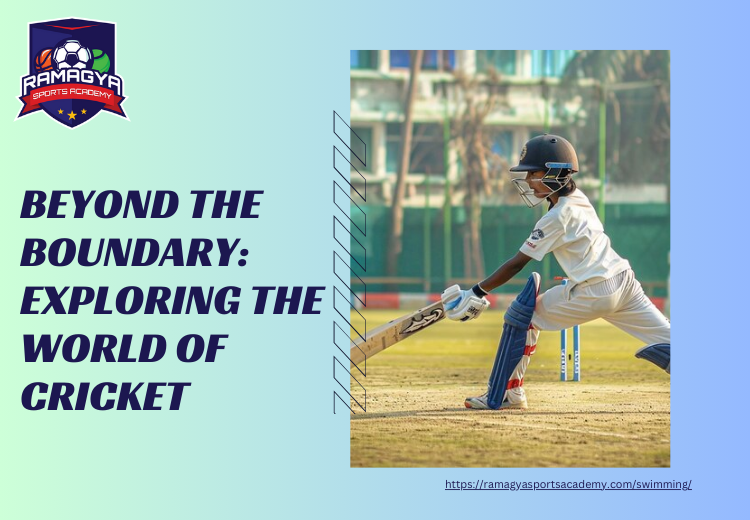
    Beyond the Boundary: Exploring the World of Cricket

    Beyond the Boundary: Exploring the World of Cricket

     
    World of Cricket
    In India, cricket is often regarded as a religion. It has now become a part of our society. Cricket unites people of all ages, genders, and orientations, from dusty town fields to glittery urban arenas, like no other sport. This blog will give you a comprehensive look at the game of cricket in India. We’ll examine how it inspires young people, its importance in community, and initiatives such as Ramagya Sports Academy’s collaboration with Crickingdom, led by none other than Rohit Sharma himself! 

    Cricket’s Rise to Popularity in India

    Cricket’s journey in India was one of excitement, enthusiasm and unending affection. It was introduced during the British Colonial era, and immediately captured the hearts of Indians. Over time, the game became more than just a sport. It became a noble sensation for the people. The game’s legendary triumphs, tragic defeats and the legends have all contributed to its position as the nation’s favorite pastime.

    The Unifying Power of Cricket

    Cricket is unique in its ability to overcome obstacles. Cricket is a game where everyone on the field is equal, regardless of whether you’re rich or poor, urban or rural. Families gather around TVs to watch matches. Friends talk endlessly about players and teams, and strangers become friends over their shared love of the game. Cricket is a game that has the ability to unite people. It encourages a sense of community and friendship unmatched.

    Inspiring the Young Generation: Impact Famous Young Cricketers in India

    Some of the inspiring cricketers are:

    • Rohit Sharma: The Hitman of Cricket

    Rohit Sharma is known in Indian cricket as “the Hitman” for his effortless stroke play and ability to score big runs. The fact that he has gone from being a promising cricketer to setting world records in limited-overs is a testament to his dedication and expertise. Rohit inspires young cricketers through his calm disposition in stressful situations and his ability to change coordinates with his batting abilities. His success shows young players that flexibility, consistency, and a love for the game are all necessary to achieve great things.

    • Virat Kohli: The Firebrand Leader

    Virat Kohli began his journey to fame at a very young age. Virat is also called “the King of Cricket.” His dedication, passion, energy and unwavering determination have helped him become a well-known name. Kohli is admired by teenagers for his batting skills, as well as his competitiveness and leadership qualities. Innumerable young cricketers have been inspired by his journey from a talented teen to the captain of the Indian cricket team. 

    • Smriti Mandhana: Breaking Barriers

    Smriti Mandhana is a pioneer of women’s cricket in India.  Known for her elegant stroke play and consistent performances, she has shattered stereotypes and proved that gender is no barrier to success in cricket. Mandhana’s rise to prominence very early in her career has inspired young women all over the country to take cricket seriously and pursue their passion for the sport. Her success is a sign of encouragement and strength, showing young girls that they can also achieve significance on the field.

    • Shafali Verma: The Teenage Sensation

    Shafali verma is one of the youngest players to represent India in cricket. She is a role model for young cricketers who are looking to improve their game. Her fearless attitude and ability to hit boundaries have inspired a new generation of female cricketers with confidence and enthusiasm. Verma’s early success in cricket is a reminder that age doesn’t matter when it comes to achieving significance.

    • Hardik Pandya: The All-Rounder Sensation

    Hardik Pandya’s dynamic and all-round skills have captured the imagination of young cricketers. Hardik Pandya’s ability to coordinate with the bat and the ball is a great example for aspiring all-rounders. Hardik’s journey from playing street cricket to representing India at the highest level resonates with youngsters who dream of making a mark in the sport. Hardik’s bravery and confidence on the field inspire young cricketers to improve their skills and seize every opportunity.

    Impact on Young Minds

    The journeys of such cricketers have left a lasting impression on the young personalities in India. These cricketers have demonstrated that anyone can progress in the game of cricket with dedication, confidence, and hard work. They have raised the bar for the game and inspired a new generation to believe in themselves and pursue their dreams of playing cricket. Whether on dusty playgrounds or in state-of-the-art academies, their stories motivate young cricketers to strive for greatness and embrace the values of sportsmanship, teamwork, and resilience.

    The Ramagya-Crickingdom Cricket Partnership

    Ramagya Sports Academy and Crickingdom (the cricket foundation founded by Rohit Sharma) have teamed up to provide an exceptional cricket program in Noida, Sec-50. Ramagya Sports Academy offers master training and best-in-class facilities for different sports, including cricket. It is one of the best academies for Cricket. 
    Their cricket program focuses on holistic development, covering technical skills, physical fitness, mental conditioning, and strategic understanding of the game.
    Crickingdom’s joint effort brings together elite preparation methods and Rohit Sharma’s expertise. Together, they aim to maintain youthful ability and offer aspiring cricketers the best opportunities to improve their skills and pursue their cricketing ambitions. 
    This organization improves the standards of training and gives youth the opportunity to be successful in the world of serious cricket.
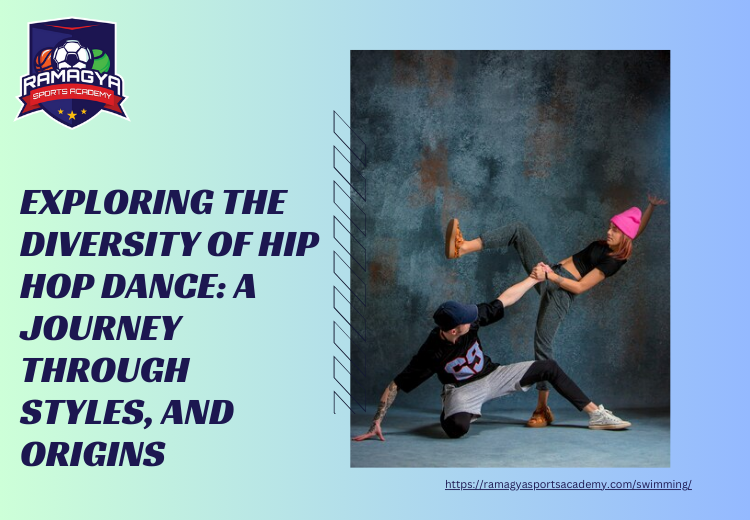
  • Exploring the Diversity of Hip Hop Dance: A Journey through Styles, and Origins

    Exploring the Diversity of Hip Hop Dance: A Journey through Styles, and Origins

    Exploring the Diversity of Hip Hop Dance: A Journey through Styles, and Origins

    Hip Hop Dance
    Welcome to the world of hip hop dance! Hip-hop dance has quickly taken the world by storm, captivating viewers with its infectious beats and innovative innovations. In this blog we’ll introduce various styles of hip hop dance along with their histories.
    Hip hop dancing has evolved into an intricate fine art with many diverse styles and techniques over time. Anyone can discover their perfect hip-hop dance form – be it the energetic style of Krumping or fluid footwork of House Dance.
    As we explore each of the five styles of hip hop dancing in greater depth in subsequent sections, highlighting their distinct traits, historical context, and cultural relevance – so get ready to experience hip hop’s rhythm! So put on your dancing shoes and prepare to move!

    What Is Hip Hop Dance?

    Hip-hop dance is more than a series of steps; it is an expression of creativity and experience from its practitioners, reflecting their individual experiences and individual styles of expression ranging from breaking, locking and popping (Krumping), each with their own distinctive steps and feel.  Artists utilize their bodies to convey feelings, and thoughts, frequently drawing motivation from their own lives and connections. From freestyle battles on street corners to choreographed routines on stage, hip hop dance gives a stage to performers to feature their ability and connectwith crowds on a more profound level. 

    Origins of Hip Hop Dance:

    The roots of hip-hop dance can be traced back to New York City’s Bronx in the 1970s. Dance emerged as a source of inspiration for marginalized groups, particularly among African American youth and Latino youth who used it as a means of self-expression. The artists combined physicality, athleticism and rhythm with storytelling to create unique styles and movements.
    The artists created unique styles and movements that mirrored their urban environment and cultural heritage, combining physicality, athleticism, rhythm, and storytelling. Over time, these casual social occasions advanced into coordinated dance contests and exhibits, establishing the groundwork for the hip-hop dance scene we know today.
    Despite its humble beginnings, hip hop dance immediately gained popularity spreading to the urban cities across the US and eventually around the world. Today, it remains a vibrant and influential form of artistic expression, inspiring countless dancers and shaping popular culture across continents. There are many types of hip hop dance. 

    Five Types of Hip Hop Dance:

    1. Breaking: Breakdancing is a hip-hop dance style that has been around for ages. The New York City street dance began in the 1970s. It is characterized by dynamic movements, acrobatics and improvisation. Breakers or B-girls perform unpredictable footwork and twists. They often freeze and twist in time with the beat of the music. Breaking is a hip-hop genre that is known for its physicality and innovative spirit. It is one of the types of hip hop dance. 
    2. Popping: A unique hip-hop style, popping is defined by quick movements called pops or hits. Artists contract their muscles and relax them in a rhythmic manner to create the illusion of locking or popping joints. Beginning during the 1970s, it gained fame close to other hip hop dance styles. It emphasizes accuracy, control, and musicality, frequently integrating robotic movements and confinements. Popping features the dancer’s capacity to control their body in a state of harmony with the music’s beat and rhythm.
    3. Locking: Locking is a dynamic and vigorous style of hip hop dance that began during the 1970s. Dancers perform particular movements called locks, where they freeze in specific poses and then continue with fluid movements. This form creates a sense rhythm and groove focusing on the timed beats of the music. Locking is described by its perky and expressive nature, frequently integrating components of comedy and storytelling into the movement. It’s a high-energy dance structure that supports uniqueness and self-expression.
    4. Krumping: Krumping is an electrifying style of hip hop dance that emerged in the mid 2000s. It’s known for its aggressive and expressive developments, frequently described by swift, jerky movements and serious looks. Krumping is well established in the feelings and encounters of the artists, filling in as a type of therapy. Dancers participate in “battles,” where they showcase their abilities and imagination through improvised movements, making a raw and strong dance experience.
    5. House Dance: House dance is a dynamic and lively style that started in the clubs of Chicago and New York City during the 1980s. It has components of jazz, funk, and Latin dance, represented by smooth motions, footwork, and unpredictable advances. House dancers frequently dance to the beat of house music, creating a dynamic and irresistible enthusiasm on the dance floor. This style stresses the opportunity for articulation and inventiveness, making it a popular choice for dancers hoping to improvise with the music and communicate their thoughts through movements.

    Conclusion:

    All in all, hip hop dance is significantly more than simply a type of entertainment. It is a strong  cultural phenomenon that has risen above limits and united individuals from varying backgrounds. By embracing the variety of these dance styles, learning its beginnings, and encountering its all round benefits, people can set out on an extraordinary journey of self-discovery, imagination, and strengthening.

  • Best Basketball Drills for Beginners

    Best Basketball Drills for Beginners

    Best Basketball Drills for Beginners

    Basketball Drills
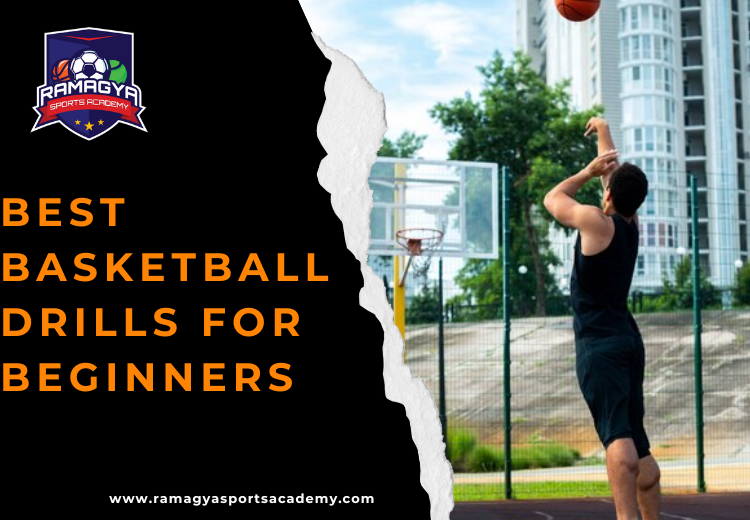
    Basketball is a fun sport that everyone can master and enjoy, no matter if you’re just beginning or trying to enhance your skills. Beginning with the basics, and progressing slowly will make a significant improvement in your performance. Regular practice is essential to improving your skills and performance in basketball.
    We’ll take a look at some of the most effective basketball drills that beginners can learn, that are designed to help you improve your skill development.

    Importance of Basketball Drills for Beginners

    Basketball skills are crucial as they assist beginners to develop fundamental skills of basketball like shooting, dribbling, passing and defending. They also help improve coordination, fitness and teamwork. When you practice these drills regularly beginner players will gain confidence and build a solid base for their basketball career.
    These drills will aid in the your skill development:

    Ball Handling Drills

    • Stationary Dribbling: Sit in a place and play with both hands, focusing on control while maintaining your head high.
    • Figure 8 Dribbling: Roll the ball in your legs, in a figure eight pattern, switching hands.
    • Dribble Tag: Join forces with a friend and attempt to tag one another while dribbling, focusing on the speed of it and controlling.

    Shooting Drills

    • Form Shooting: Stand next to the basket, and focus on correct shooting form, grip the stance, follow-through, and grip.
    • Spot shooting: Shoot from different spots around the key, with a focus on accuracy and consistency.
    • Layup Drills: Begin under the basket, and then practice layups with both hands, and focusing on using the backboard.

    Passing Drills

    • Chest Passes: Sit with your partner to practice passing the ball with the chest pass technique with a focus on strength and accuracy.
    • Overhead Passes: Try using the overhead pass in order to simulate passing over the defenders
    • Outlet Passing: Begin by putting your feet under the basket, and then try passing the ball over to a player on the other side of the court. with a focus on distance and accuracy.

    Footwork Drills

    • Defensive Slides: Work on doing laterally while keeping your body in a low position and keeping your body in the middle of the basketball and the offensive player.
    • Jump Stops: These are a good way to practice stopping rapidly and in a controlled manner by being able to land on both feet to keep the balance, and get ready for shooting or passing.
    • Pivot Drills: Exercise pivots both feet in order to change direction and shield the ball from the defenders.

    Rebounding Drills

    • Box out drill: Work on getting yourself in the middle of the basket and the player to make sure you are secure with rebound.
    • Tap Drills: Tap the ball against the backboard and practice gripping the rebound using both hands.
    • Team Rebounding: Collaborate with your teammates to create game-like scenarios where you are competing for rebounds.

    Game Situational Drills

    • 3 on 3 Scrimmages: Play games with small sides to test offensive and defensive skills in a safe environment.
    • Speed Breaks Drills: Train in transitioning between offense and defense in a short time with a focus on passing and finishing with a basket.
    • Shots Under Pressure: Shoot with either a defender or duration limit in order to mimic the pressure of a game.

    Conditioning Drills

    • Suicides: The best way to prevent suicide is to run through the center of the court to reach the free-throw line, return to baseline back to half-court, then return to the baseline, focussing on endurance and speed.
    • Interval Sprints: Alternate between sprinting, and jogging to increase endurance and cardiovascular fitness.

    Tips for Effective Practice

    The practice of these drills can aid in developing fundamental skills of basketball.

    • Training and Strength: Include strength-training exercises that are specific to basketball, like leg exercises to help you jump with explosive force and core exercises to build endurance and stability. A solid foundation in your physical fitness will greatly improve your performance. It is among the most essential elements of the fundamental basketball skills.
    • Set Goals: Create short-term and long-term objectives for your basketball skills as well as overall performance. Set goals that are specific and measurable will help you monitor the progress you make and keep you focused through your training.
    • Relaxation and Recovery: Give yourself enough time for recuperation and rest between practices and games. Resting your muscles allows them to recover, decreases the chance of injury, and makes sure that you are at your peak during competitions and practices.
    • Nutrition: Keep a healthy diet that includes plenty of vegetables, fruits protein, lean proteins, as well as whole grains. A healthy diet fuels your body to perform at its best on the court and aids in the recovery of muscles after workouts that are intense.
    • Game Awareness: Build a solid knowledge of basketball rules strategies, tactics, and game scenarios. A good understanding of the game’s flow as well as defensive and offensive tactics and court position improves your ability to make decisions and improves overall performance as a player.
      Implementing these suggestions in your basketball routine, along with practices and drills will help your progress and achievement in the sport. Continue to work hard and have fun on your basketball experience!

    Conclusion

    Incorporating these basketball drills in your routine of practice to improve your game and enjoy playing more. Remember that basketball is more than the physical skills of players. It’s about teamwork, strategy and enjoying yourself.
    When you’re shooting hoops in the company of teammates or participating in a tournament These drills can aid you in becoming more proficient and enjoy the game to the maximum.
    Be consistent, keep practicing and watch your abilities increase!

  • Basketball Stretches to Get Loose and Avoid Injuries

    Basketball Stretches to Get Loose and Avoid Injuries

    Basketball Stretches to Get Loose and Avoid Injuries

    Basketball Stretches
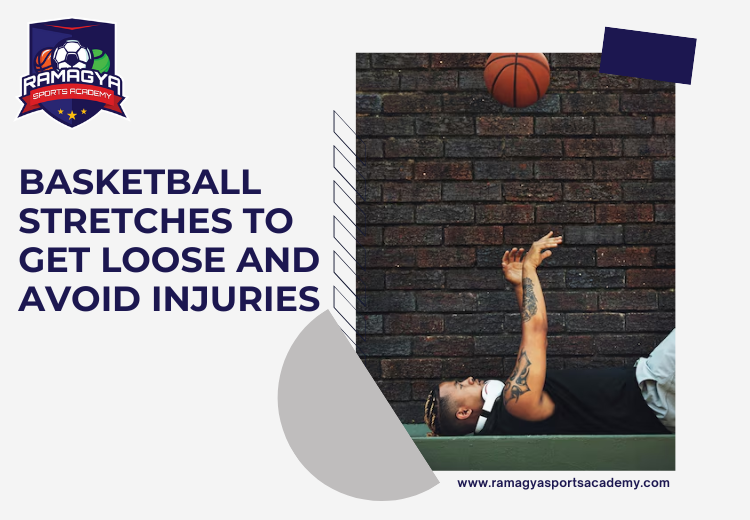
    Basketball is a fast-paced sport that calls for agility, quick thinking, and rapid reflexes. It’s essential to warm up correctly with stretches in order to perform at your peak and prevent injuries on the court. Stretching increases flexibility, increases range of motion, and reduces muscle rigidity. Include these six ball stretches in your daily warm-up routine to stay injury-free and free. The basketball stretches are really important, both before and after b-ball to prevent injuries.

    Some of the Basketball Stretches are:

    • Leg Swings

    Why It Matters: Leg swings help you increase your flexibility and relax your leg muscles, which is important for movements like sprinting, jumping, and turning. It is a necessary addition to B-ball. It is one of the most important Basketball Stretches.
    Guidelines to Implement it:

    • For balance, stand up straight and hold onto a wall or other sturdy object.
    • Controlfully swing one leg backwards and forth.
    • Make ten to fifteen swings with each leg.
    • Change legs and repeat.

    Tip: Use your hip to manage the growth while keeping your swinging leg flexible.

    • Stretching the hip flexors

    Why It Matters: Ball involves a lot of sprinting and risky moves that help strengthen the hip flexor muscles. By extending them, you can prevent stress and increase adaptability.
    Guidelines to Implement it:

    • Take a step forward and plant one foot in a jumping position.
    • Maintain a straight rear leg and a 90-degree bent front knee.
    • Lean slightly forward to activate your rear leg’s hip flexors.
    • Give the stretch a 20–30 second hold.
    • Change legs and repeat.

    Tip: It is to avoid bending your lower back and to maintain your middle upright.

    • Stretching the Hamstrings

    Why It Matters: For hopping and sprinting on a ball, hamstrings are essential. By extending them, tensions are avoided and adaptability is further developed.
    Guidelines to make it happen:

    • With one leg extended wide in front of you, take a seat on the floor.
    • Lean forward from your hips and extend your arm to touch your toes.
    • Give the stretch a 20–30 second hold.
    • Change legs and repeat.

    Tip: Maintain a straight back, avoid skipping, and simultaneously stretch.

    • Calf Stretch

    Why It Matters: Strong areas are essential for sensitive processes like hopping and quick path changes. Stretching them prevents strains on the calves. It is one of the players’ primary ball extensions.
    Guidelines to make it happen:

    • Carefully face a wall while standing there.
    • For assistance, place your hands shoulder-level on the wall.
    • Maintain a straight back leg and a grounded heel.
    • Step forward in the direction of the wall until your calf stretches.
    • Give the stretch a 20–30 second hold.
    • Change legs and repeat.

    Tip: To lengthen the stretch, maintain both heels flat on the ground.

    • Stretching the Quadriceps: 

    Why It Matters: In basketball, the quadriceps muscles are crucial for running and jumping. Stretching them lowers the chance of injury and helps them stay flexible.
    Guidelines to Implement it:

    • Grasp your ankle or foot with one hand, stand erect, and lift one foot behind you.
    • When you feel a stretch at the front of your thigh, slowly bring your foot closer to your buttocks.
    • Give the stretch a 20–30 second hold.
    • Repeat after switching legs.

    Tip: Avoid arching your lower back and keep your knees close together.

    • Groin Stretch

    Why It Matters: Groin muscles play a significant role in lateral movements and changes in direction on the basketball court. Stretching them helps prevent strains and enhances flexibility.
    Guidelines to Implement it:

    • Sit on the floor with the soles of your feet together and your knees bent out to the sides.
    • Hold your ankles with your hands and gently press your knees towards the ground.
    • Hold the stretch for 20-30 seconds while keeping your back straight.
    • Repeat 2-3 times.

    Tip: Ease into the stretch and avoid bouncing or forcing your knees down.

    Ramagya Sports Academy: The Best Place to Learn Basketball

    Ramagya Sports Academy provides the ideal environment for aspirational basketball players to grow and achieve. Our top-notch offices provide spacious courts furnished with cutting-edge amenities to support your preparation needs. Regardless of your skill level, our seasoned mentors provide tailored guidance and training plans designed to improve your skills.
    Situated in a vibrant and secure neighborhood, Ramagya Sports Academy promotes a culture of excellence and collaboration among competitors. Our commitment to comprehensive development ensures that players improve not only their basketball skills but also core attributes like flexibility, sportsmanship, and discipline.
    Join us at Ramagya Sports Academy and experience the difference in your basketball journey. Our commitment to assisting you in realizing your maximum potential in basketball and other sports extends to offering in-depth training programs and competitive chances.

  • Getting into Jazz: Essential Tips Before Hitting the Dance Floor!

    Getting into Jazz: Essential Tips Before Hitting the Dance Floor!

    Getting into Jazz: Essential Tips Before Hitting the Dance Floor!

    Jazz Dance Class
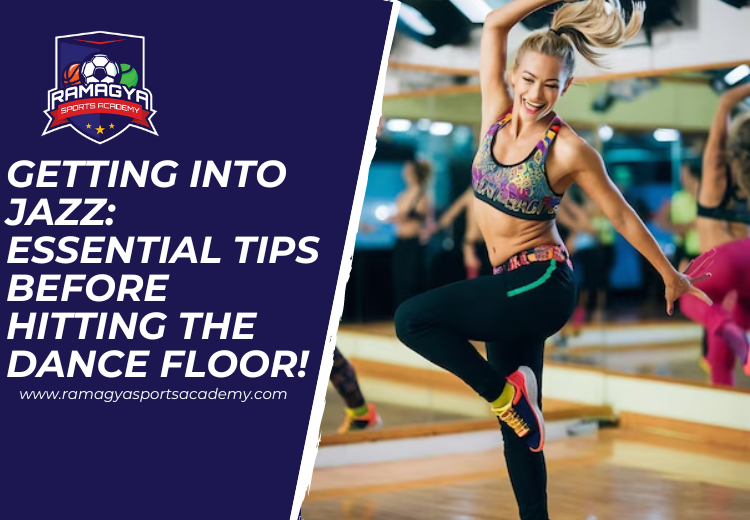
    Welcome to the fascinating jazz dance world, where expression, style, and rhythm combine to create stunning dance moves. Jazz dance is a thrilling celebration of movement, music, and individuality in addition to being an art form! This dance journey promises to be an exciting adventure full of creativity and discovery, regardless of whether you are an experienced dancer wishing to add more pieces to your dance routine or an enthusiastic beginner ready to learn about this exciting form!
    Dynamic movements, synchronized patterns, and expressive choreography are the fundamental elements of jazz dance, an expressive art form. Jazz began in African American communities in the early 20th century and has since expanded to incorporate elements of many other musical and cultural traditions. From the upbeat performances of Broadway jazz to the sophisticated, smooth, modern forms of hip-hop jazz, jazz has something to offer every kind of audience.
    Before taking your first steps onto the dance floor in jazz dance, you should keep a few essential tips in mind. From understanding its distinctive style to what to expect physically when dancing jazz dance, this guide will equip you with the knowledge and confidence to start dancing gracefully and confidently.
    No matter your level, experience the joys of jazz dance! Move with rhythm or set your rhythm – whatever inspires you most.

    Embrace the Style:

    Jazz dance is known for its dynamic and versatile style, encompassing various movements and expressions. Before beginning classes in jazz dance, one must understand its distinctive aesthetic—from sharp isolations to smooth transitions, jazz demands strength, flexibility, and musicality in equal measures.
    To truly embrace jazz dance, immerse yourself in its rhythm and energy. Explore its rich history and evolution while appreciating cultural influences and artistic nuances. Take this opportunity to develop your interpretation of jazz dance movements expressing emotion and personality.
    Engaging with jazz dance means opening yourself up to being expressive and creative on the dance floor, whether as an amateur or expert dancer. No matter your experience level, embracing its style allows for joyful movement while providing authentic expression through dance. So step enthusiastically into its world and embrace its distinct style!

    Prepare to Move:

    Jazz dance is all about energy and movement—so be ready for some energetic moves! Students must remember that jazz dancing demands solid physical endurance, rhythmic footwork, and dramatic lifts and twists before they start instructions.
    Warm up with stretches and aerobic exercises to improve your flexibility and endurance before attending jazz dancing classes. Perform basic dance techniques such as plies, tendus, and relieves to strengthen muscles and gain control. Most importantly, come ready to learn with an open mind and a positive learning experience!
    Beginning as a veteran dancer, getting ready to move means opening yourself up to the joy of dancing and expressing yourself through movement. So put on your dancing shoes and unleash your inner dancer on the jazz dance floor!

    Dress the Part:

    You must dress comfortably and efficiently for optimal movement when prepping for jazz dance classes. Opt for form-fitting clothing such as leggings or dance shorts with a fitted top. Avoid bulky or restrictive attire that might limit your movements.
    Buy jazz shoes with split soles for support and flexibility when performing intricate footwork and turns. Consider accessorizing with dance belts, legwarmers, or hair ties to keep your outfit practical yet stylish.
    Dressing to impress contributes to physical comfort and encourages an environment conducive to learning and performance. Wearing clothing that makes you feel confident will allow you to enter the dance floor with enthusiasm and focus. So put on your best attire and enjoy immersing yourself in jazz dance!

    Listening to the Music:

    Jazz dance relies heavily on music to create its movement and expressions. Before beginning dance classes, one must develop an ear for its various genres—swing rhythms, syncopated beats, and melodic improvisations are hallmarks of jazz compositions that should become familiar to you before entering class.
    Listening to jazz music deepens your appreciation of its art form and can also help you internalize its rhythm and mood. Please pay close attention to its tempo, dynamics, and phrasing, as these may affect the style and interpretation of dance movements.
    Engage with the music in jazz dance classes by dancing in sync with its rhythm and accents, drawing inspiration from melodies and lyrics for movement and expression on the dance floor.
    Develop a keen ear for jazz music to deepen your understanding of jazz dance and increase your ability to connect with it through movement. Let jazz music guide your journey as you venture forth on your jazz dance journey!
     

    Find the Right Class:

    Before enrolling in jazz dance classes, make sure you take time to research and find one that meets your skill level, goals, and schedule. Consider whether you are a beginner, intermediate, or advanced dancer when looking for appropriate classes tailored specifically for them.
    Investigate potential instructors’ credentials and teaching style to ensure they possess expertise that aligns with your learning style and preferences. Inquire about class sizes, facilities, and curriculum offerings to ensure they meet your needs and expectations.
    If possible, attend a trial class or observe a session to assess the atmosphere and teaching methods before committing. This will enable you to determine whether it meets your needs.
    Finding the ideal jazz dance class is essential to an enjoyable learning experience, so take time to find a class that resonates with you and allows you to grow as an artist.

    Have Fun!:

    Remember that jazz dance is about Enjoyment and Self-Expression. Jazz dance should be experienced as a source of enjoyment and expression. While embarking on your jazz dance journey, make time for playfulness and embrace movement as your primary goal.
    Approach each class with an optimistic and open mindset, allowing yourself to fully experience the experience without striving for perfection. Dance with passion, energy, and enthusiasm to express yourself fully – let go of inhibitions and embrace your unique style!
    Recognize and celebrate all your progress and achievements, no matter how small, while reveling in moments of creativity and freedom on the dance floor. Surround yourself with supportive classmates and instructors who share your love of dance and will encourage your growth as an artist.
    By prioritizing fun and enjoyment during your jazz dance classes, you will improve your skills as a dancer and foster a stronger connection to this art form. So, go ahead, express yourself freely, and have some fun!

    Conclusion:

    Our journey into jazz dance has shown us its power to engage, motivate, and uplift us in numerous ways. From the infectious energy of lively jazz routines to soulful melodies that stir us deeply, jazz dance is truly an art form celebrating life, music, and movement!
    As you continue exploring and honing your jazz dance skills, make sure that you embrace its spirit of creativity, spontaneity, and individuality. Whether performing onstage, dancing with friends, or simply listening to some jazz tunes in the comfort of your own home, let jazz dance bring joy to every step you take.
    Be bold! Keep dancing, keep learning, and let jazz enrich your life! Regardless of your dance journey, jazz will always lift spirits and release souls!

  • Shape Your Destiny: The Ultimate Guide to Becoming a Gym Trainer

    Shape Your Destiny: The Ultimate Guide to Becoming a Gym Trainer

    Shape Your Destiny: The Ultimate Guide to Becoming a Gym Trainer

    Gym Trainer
    Are you passionate about fitness and ready to support others as they pursue wellness? There is always a question that is how to Become a gym trainer.
    Working as a gym trainer can be the ideal method to make your hobby a successful job. Those pursuing certification as gym trainers are motivated by their passion for fitness. Their desire inspires others to embark on their own fitness journeys. A gym trainer’s responsibilities extend beyond instructing exercises. It’s about establishing a friendly environment where people can pursue an enlightened lifestyle and fitness objectives.
    This blog will examine the essential procedures, requirements, and duties to succeed as a gym instructor. From understanding the education requirements to enhancing interpersonal skills and understanding the various nuances of the position and responsibilities. We’ll provide you advice so you can continue with this exciting career. You might be an enthusiastic fitness enthusiast attempting to turn your hobby into a career, or you might be someone hoping to work in the health and fitness industry and have a fulfilling career. This blog will provide you with the knowledge and abilities needed to succeed as a fitness instructor.

    Qualifications:

    How to become a gym trainer? Although it is not always required, getting an exercise science degree, kinesiology, or a related field can give you an excellent base.

    • Earn certifications: You can earn accreditations from credible organizations like NASM, ACE, or ACSM. These certifications usually require an education program and passing a test.
    • Have a real life experience: To get the required experience of interacting with clients, look for positions as interns or entry-level employees in gyms and fitness facilities.
    • Improve your communication abilities: It’s very important to be able to relate to your clients. A gym trainer should be able to comprehend the needs of clients, and provide them with precise instructions.
    • Empathy: Empathy allows fitness instructors to understand the goals and difficulties of their clients and to offer each one of them individualized advice and support.
    • The ability to inspire others: Develop the ability to inspire others. One of the most important aspects of the work is motivating clients to meet their fitness goals. Motivation is the key to a healthy body.
    • Stay up-to-date: Stay up to date with the most recent Improvements. Research about the trends in fitness programs to provide clients with the most accurate recommendations.
    • Network: Make connections in the fitness industry. Try to learn from experts who have been there and explore possibilities for growth and advancement.

    Skills:

    A wide range of abilities is crucial for fitness trainers who want to be successful in their careers:

    • Communication: Good communication skills are essential for developing trust with clients, understanding their requirements, and giving clear guidelines during exercises.
    • Motivational:  Fitness trainers need to have the ability to motivate and inspire clients to keep their commitment in their pursuit of fitness particularly in challenging times.
    • Empathy: Empathy allows trainers to recognize their clients’ challenges, motivations, and struggles, which will enable them to provide personal assistance and encouragement.
    • Adaptability: The ability to adapt and be flexible is vital in adjusting programs to meet the various desires and needs of clients.
    • Problem-solving: Trainers need to be able to identify and resolve any hurdles or obstacles that their clients might face during the path to fitness.
    • Technical knowledge: A thorough understanding of exercise physiology and anatomy is required. The correct methods of exercise are vital to developing safe and efficient training programs.
    • Time management: Effectively managing time will ensure that trainers can efficiently schedule appointments, plan workouts, and provide the appropriate assistance to clients of all ages.

    Role and Responsibilities:

    Anyone who wants to become a professional must comprehend the duties and function of fitness trainers. These are some responsibilities to answer how to become a gym trainer:

    • Evaluation of clients: Conduct comprehensive tests to determine your customers’ fitness levels, medical histories, objectives, and limitations.
    • Customized Workout Plans: Develop personalized training routines that are tailored to each client’s requirements, interests, and objectives.
    • Instruction and demonstration: To guarantee that the clients can exercise safely and effectively, provide them clear instructions and model suitable exercise techniques.
    • Motivation and Support: Use accountability, encouragement, and positive reinforcement to keep customers motivated and on their fitness journeys.
    • Progress tracking: To keep customers motivated and involved, keep an eye on their development by modifying exercises as needed and rewarding them when they reach objectives.
    • Prevent Risk and Safety: To protect clients, make sure equipment is utilized properly and keep a careful eye on form and technique so that any necessary adjustments can be made as soon as injuries occur.
    • Continued Education: To ensure that your knowledge and skills grow over time, stay up to date on the latest health trends, research findings, and certifications.

    Salary:

    • Pay for fitness instructors in India is dependent upon several factors including the type of job, their degree of experience, location and their qualifications. At an entry level in India, fitness trainers generally earn salaries ranging between Rs2,00,000 and Rs4,00,000 annually. 
    • With years of experience and knowledge fitness instructors can be paid higher salaries, ranging between Rs4,00,000-Rs10,00,000 annually or higher.
    • Independent trainers and those who run their own fitness studios might be able to earn more based on the performance of their business and customer base. 

    It is important to remember that these pay ranges are approximate and could change depending on the individual’s circumstances and the market conditions.

    Conclusion:

    • In short, the fitness industry allows them to combine their passion for fitness with a rewarding job. By obtaining the required credentials, future trainers can create a strong foundation for their success in this booming field. 
    • By developing the necessary abilities, comprehending their duties and responsibilities, and assessing the possibility of income prospects, they can build a strong community.
    • In private or public fitness centers, trainers act as agents of positive change, helping clients achieve their fitness goals and promoting healthier lives.
    • With customized training plans, motivational programs as well as ongoing training, instructors help clients to overcome their challenges in their journey. They can get results and make a lifetime commitment to health. 
    • Despite the different salary opportunities that are dependent on factors such as geography, experience, and customer base, commitment and determination are essential to maximize earning potential in this  profession.
    • Fitness trainers have crucial roles in promoting health and well-being within their communities, making an impact that lasts on clients’ lives. As fitness trainers who are stewards and advocates for healthier lifestyles, they help create a healthier and brighter future for society and individuals alike.
  • Shield Yourself: Essential Self-Defense Techniques Unveiled

    Shield Yourself: Essential Self-Defense Techniques Unveiled

    Shield Yourself: Essential Self-Defense Techniques Unveiled

    Self-defense
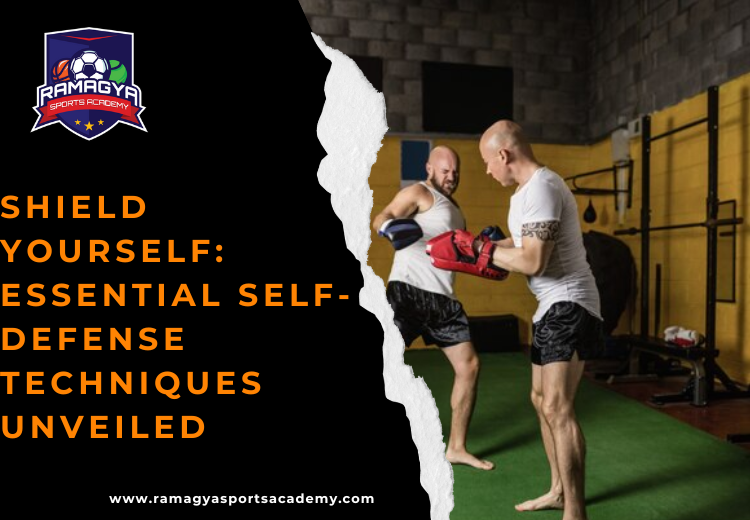
    Beyond offering defense on a bodily level, building self-assurance and confidence requires the ability to defend oneself. Your sense of self-worth and confidence will soar if you can protect yourself against harm. Furthermore, learning self-defense techniques aids in developing life qualities like confidence, self-assurance, and efficient communication, all of which are advantageous in various spheres of one’s existence.
    Self-defense requires more than physical prowess. It also requires strategic planning and mental agility. By becoming more aware of their surroundings and developing efficient threat assessment and reaction skills, people can reduce dangers and improve their security in stressful situations.
    This blog will go over the essential self-defense strategies that all should be aware of. From basic strikes and escape strategies to verbal de-escalation and physical defense, these methods give you the foundation to self-protection and self-defense.

    Awareness and Prevention:

    • Be aware of your surroundings and rely on your instincts, which will often help you in avoiding dangers completely. 
    • Be aware of your surroundings especially in secluded or remote areas. Be aware of your surroundings and stay clear of situations or people who make you feel uncomfortable. 
    • If you are vigilant and alert that you are, you can be proactive in avoiding possible threats and stay protected. Keep in mind that prevention is the best defense against self-defense. Stay alert, stay safe.

    Verbal De-Escalation: 

    • Verbal de-escalation is an essential skill for self-defense training. It requires clearly and confident communication to calm potentially dangerous situations. 
    • When confronted by an adversary, be calm and composed. Be confident and assertive by establishing clear boundaries and express your intention to stay clear of conflict. 
    •  Avoid using provocative or aggressive words, since this could increase tension. Instead, try to maintain an empathetic and calm manner and firmly declare your  right to security. 
    • If you can effectively communicate your limits and intentions it is possible to calm tensions and stop these from turning into physical fights.

    Maintain a distance from your adversaries: 

    • Keeping the distance between you and your adversaries is an essential element of self-defense. When you keep an appropriate distance from your attacker, you create a buffer zone which allows you to evaluate the situation and take appropriate action. 
    • If you are approached by someone who is aggressive then step back and put distance between yourself and the person who could be threatening. This gives you more time to analyze the situation and determine the next steps.
    • If you keep your distance, you enhance the chance of avoiding physical injury and provide you with chances for escape, or seeking assistance should you need it. Keep in mind that distance is a good friend when it comes to self-defense.

    Escape Techniques: 

    • Escape techniques are essential in self-defense situations. If an attacker grabs you or holds you in a position learning how to get free could save your life. 
    • Try out techniques like release of the wrist, escape for elbows and groin strikes, to create openings, escape holds, or grabs. Keep alert and focused, looking over your surroundings for possible escape avenues.
    • Make use of lean and speed to advantage, looking for areas that are vulnerable to your attacker and give them an opportunity for escape. When you master escape techniques enable you to avoid danger and seek refuge in dangerous situations.

    Ground Defense: 

    • Ground defense is essential for self-defense training, particularly if you’re forced to fall down in the course of an attack. Learn the fundamentals of bragging, squirting and striking the ground to make space, and then get back to your feet. If you practice these strategies you will be able to protect yourself and avoid further injury while lying on the ground. 
    • Concentrate on staying aware of your surroundings and remaining calm under stress. If you are properly trained and prepared you will increase your chance of escaping potentially dangerous situations and taking back control over the situation. 
    • Remember that ground defense is a crucial element of a comprehensive self-defense training.

    Get Professional Training: 

    • Getting professional instruction is vital to learning self-defense training. Participate in self-defense classes or martial arts classes with qualified instructors. 
    • They can offer training in the hands-on, personal feedback, and real-world training that will help you to develop proficient self-defense abilities. 
    • They can also help you to recognize the threat, respond in a stressful situation, as well as remain protected in all scenarios. 
    • If you take part in professional instruction, you will gain the skills, confidence and experience to safeguard yourself and others with confidence. Self-defense is an art that needs training and instruction from experts to learn.

    Conclusion:

    • The conclusion is that mastering the fundamentals of self-defense are vital for all people regardless of gender, age or physical capability. By incorporating awareness and preventive strategies into your everyday life it is possible to stay clear of dangerous situations and reduce the chance of injury. 
    • Skills for de-escalation in the spoken word allow you to manage conflicts in a peaceful manner and keeping a safe distance from threats allows you the chance to think about and react effectively. 
    • Knowing escape strategies and ground defense will ensure that you are protected should physical confrontation become inevitable.
    • Getting professional instruction from experienced instructors is a great way to improve your self-defense abilities and build confidence in your abilities to defend both yourself as well as others. 
    • Through consistent practice and determination you can build the skills, knowledge, and attitude needed to remain protected in any situation. 
    • Be aware that self-defense isn’t about fighting back, but the ability to react with confidence to any threat and guarantee your security. 
    • When you master these self-defense skills to improve your personal security, increase your confidence and travel the world with more security. 
    • Keep an eye on the situation, be vigilant, and be sure to prioritize your security at all times.


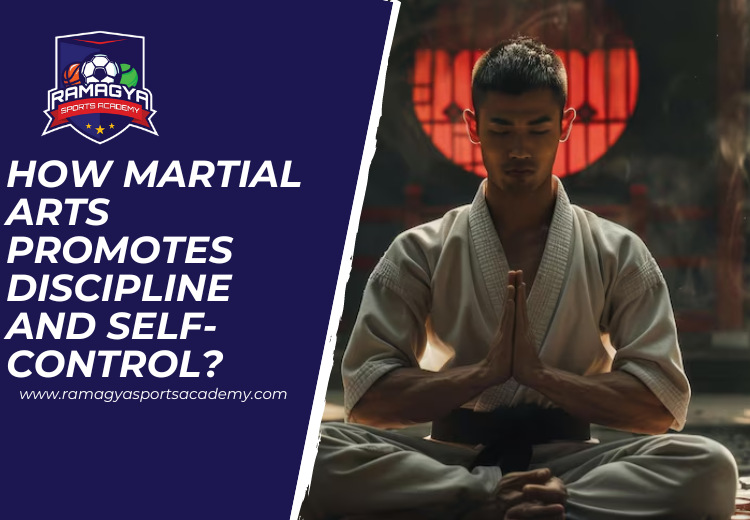
  • How Martial Arts Promotes Discipline and Self-Control

    How Martial Arts Promotes Discipline and Self-Control

    How Martial Arts Promotes Discipline and Self-Control?

    martial arts discipline

    Martial arts is more than simply learning how to defend yourself or fight a fright, it’s an exercise that helps develop important life skills like the discipline of self control. It doesn’t matter if you’re pursuing karate, the taekwondo or judo forms, or any other type of discipline of Martial arts , the concepts and techniques taught in Martial arts go beyond the physical aspect. 

    In this article we’ll look at how Martial arts training helps develop discipline and self-control for people of all age groups.

    Understanding Martial Arts Training

    Martial arts training covers various disciplines that were developed from the ancient practices of combat. Nowadays, Martial arts classes are designed to teach methods but also fundamental principles like respect, perseverance and humility. Students move through levels and earn belts to show their progress and mastery as a practitioner.

    The Role of Discipline in Martial Arts

    1. Regular Practice: Martial art requires consistent attendance and regular practice. Students are urged to attend classes regularly, which helps instill an attitude of discipline at an early stage. Regular practice is crucial to improving techniques and moving up the levels.
    2. Respect for the Rules and Authority: The classes in martial arts are guided by rules and protocol that students are required to follow. This includes bowing before instructors, adhering to the etiquette of the dojo and a respect for the other students. These rules help students understand how important it is to respect the authority of their instructors and follow them with strictness.
    3. Setting Goals and Achieving Them: The progress in martial arts is measured through the attainment of various rank levels, or belts. Students establish goals specific to themselves and then work hard to meet them. The process of setting goals teaches students the importance of persistence, hard work and keeping their eyes on the longer-term goals.

    Learning self-control through Martial Arts

    1. Resilience to Emotions: Martial arts training is focused on the management of emotions, particularly in competitions or sparring. Students are taught to stay cool and calm, even when under extreme pressure. The ability to manage feelings extends well beyond dojo into everyday life, helping individuals deal with stress and conflicts effectively.
    2. Physical Control: The Martial arts practices demand precise coordination and movements. Through repetition students learn to develop the ability to control their bodies, enhancing their flexibility, balance and agility. This physical discipline results in greater control of the movements and actions of one’s body in various settings.
    3. Conflict Resolution: Martial arts emphasizes peaceful conflict resolution strategies. The students are instructed to employ their abilities only for self-defense and avoid confrontation when it is possible. This strategy encourages peaceful conflict resolution, and also helps students to think before they react in a hurry.

    Benefits of Martial Arts Beyond Discipline and Self-Control

    1. Physical Fitness: Training regularly in Martial arts classes increases cardiovascular health, strength and endurance. Techniques such as punching, kicking and grappling give you the entire body with a workout that increases the overall fitness level. It is one of the best ways to boost physical fitness.
    2. Mental Acuity: Training in martial arts enhances cognitive capabilities such as concentration, focus and problem-solving. Learning new techniques and strategies stimulates the mind and enhances the mental acuity of a person.
    3. Self-confidence: When students advance in their martial art, they develop confidence in their skills and establish a positive image of themselves. The ability to overcome challenges and achieve goals improves self-esteem as well as empowers individuals in and out of the dojo.

    Practical Tips for Parents and Students

    1. Inspire Consistency: Consistent attendance is vital in gaining the advantages of training in martial arts. Your child should be encouraged to be consistent in attending classes to develop discipline and observe the progress.
    2. Reinforce respect and etiquette: Make it a priority to emphasize that it is important to respect your instructors as well as fellow students and the martial arts community. Respect and etiquette in the dojo helps to develop discipline and promotes positive conduct.
    3. Discuss the values learned: Discuss regularly with your child the lessons they’re learning through martial arts like discipline as well as self-control and perseverance. Apply these principles to daily situations in order to reinforce their use in everyday life.

    Conclusion

    In the end, Martial arts classes are an effective tool to promote self-control and discipline across all ages. Through regular training and a respect for rules as well as authority, and the development of physical and emotional control students acquire life-changing abilities that go beyond the confines of the dojo. 

    If you’re a kid or an older adult, lessons you learn in martial arts classes will positively impact all aspects in your daily life transforming you into more disciplined, focused and self-aware.

    Take on the challenge of training in martial arts classes and discover the transformative impact it can bring to your life!

  • The Evolution of Indoor Sports : A Historical Perspective

    The Evolution of Indoor Sports : A Historical Perspective

    The Evolution of Indoor Sports : A Historical Perspective

    History of Indoor Sports
    Indoor sports have a long tradition that spans centuries beginning with simple recreational activities to competitive events that attract millions of people around the world. This fascinating journey in the history of indoor sports provides insight into the growth of the sport, its significance, and the impact of indoor sports on society.

    Ancient Origins:

    Indoor sports have a long history dating back to times of old when people wished to have fun and physical exercise in indoor spaces. Imagine old Egyptians sitting around playing Senet which is a board game that combines luck and strategy, or participating in Mehen the game, which symbolizes faith that they would be reincarnated. 
    Similar to this, the early Chinese dynasties were fond of indoor games such as Jianzi which was akin to the hacky sack of today, encouraging the ability to balance and agility.
    These old-fashioned pastimes laid the foundation that would later become the indoor sport we enjoy today. They established the seeds of camaraderie and competition that are still flourishing in the modern gyms and arenas. 
    Starting with humble foundations like Senet as well as Mehen to the hysterical courts of volleyball and basketball indoor sports have transcended the boundaries of time by connecting us to our past and forming our sporting tradition.

    Medieval Europe:

    In the Middle Ages, indoor sports were thriving in popularity, with archery, bowling and fencing becoming popular among the nobility as well as commoners. Halls and courts indoors were places for social gatherings as well as sporting events, encouraging friendship and competition among communities.

    Industrial Revolution:

    The Industrial Revolution of the 18th and 19th centuries brought about significant technological advancements and urbanization, which influenced the growth of sports that were played indoors. As indoor facilities like gyms, arenas and recreation clubs, sports like volleyball, basketball and badminton were able to be played as organized indoor activities that provided ways to exercise and play in urban environments.

    Modern Era:

    The 20th century saw the expansion of commercialization and globalization indoor sports, which was fueled by advances in transportation, communication, and the media. Tournaments, leagues, and championships were normal, elevating sport in the indoor arena to top of global athletics and entertainment. iconic venues such as Madison Square Garden and the Staples Center became synonymous with indoor sports, hosting elite events that thrilled audiences across the globe.

    Cultural Impact of Indoor Sports

    Indoor sports have left a permanent impact on all cultures around the world that have shaped norms for society as well as values and identities. From ancient times to contemporary societies outdoor sports played a crucial part in shaping the cultural landscape and in fostering a sense of community.

    • Bridging Divides: Indoor sports provide an opportunity for people of diverse backgrounds can meet, transcending the boundaries of age, gender or ethnicity. If it’s a game of fun in the gym at home, or a game with table tennis in the indoor arena, games offer opportunities for interactions and mutual respect.
    • Celebrating Tradition: A lot of indoor sports have deeply rooted traditions and rituals that go to them, which reflect the culture of their heritage. For instance Kabaddi, a Japanese practice of Sumo wrestling as well as The Indian Kabaddi game Kabaddi are rooted in tradition, and are accompanied by ceremonies and rituals that acknowledge their importance to culture.
    • Fostering Identity: Indoor sports are often an expression of self-confidence and national identity as countries adopt certain sports as part of their heritage. Basketball is, for example, closely associated with American culture, and cricket is a position in the minds of a large number of South Asians.
    • Promoting Inclusivity: Indoor sports encourage inclusion by offering opportunities to people of all backgrounds to take part and perform. For example, whether it’s adaptive sports programs designed for people who have disabilities or initiatives that aim to increase women’s participation in indoor sports, they strive to build an inclusive and fair society.
    • Inspiring Creativity: Indoor sports foster the ability to think and innovate and innovation, as athletes continuously seek ways to beat their competitors. From tricks shot in the water to amazing movements within gymnastics. These games inspire people to push the limits of what is possible.

    Health and Wellness:

    Indoor sports play a significant part in improving well-being and health, providing individuals with the opportunity to fitness, socialization, as well as stress relief. In fact, playing activities in the indoor environment has been proven to lead to numerous mental and physical health benefits, including better overall health and fitness, improved coordination, and a lower likelihood of contracting chronic diseases. 
    Additionally, indoor sports offer ways to grow personally in skill development, as well as teamwork, fostering values of determination, discipline and sportsmanship among athletes from all age groups.

    Future Outlook:

    In the future indoor sports are set to evolve and change to the ever-changing demands and preferences of society. Technology advancements like virtual real-time and augmented reality could revolutionize how indoor sports are viewed and enjoyed, providing immersive and engaging experiences for athletes as well as fans. 
    In addition, initiatives that promote inclusiveness as well as diversity and sustainability in indoor sports are likely to spur development and innovation over the next few years making sure that indoor sports will remain relevant and influential in the 21st century, and beyond.

    Conclusion:

    In the end, the development of indoor sports reflects the dynamic interaction between innovation and tradition, the business world and the culture, as well as athletics and entertainment. From ancient pastimes to current spectacles indoor sports have stood the test of time as a symbol of the inherent human spirit of friendship, camaraderie and excellence. 
    In the years ahead, we will celebrate the history of indoor sports and the potential of indoor sports. Let’s celebrate the path that took us to the point we are now and take a leap into the future.