When you’re feeling under the weather, it can be challenging to decide whether to stick to your fitness routine or take a break. This blog will help you understand the best approach to working out while sick, considering the impact on your body and overall health.
Should you workout when you are sick? Understanding Your Symptoms
Before beginning an exercise routine, it’s essential to evaluate how severe your symptoms are. Are they mild – like runny nose – or more serious – like fever and body aches? Understanding your symptoms will enable you to make a more informed decision regarding fitness regime.
- Common Cold Vs. Flu: Before deciding to work out, it’s essential to assess how you feel. Are your symptoms mild, like a runny nose, or more severe, like a fever or body aches? Understanding your symptoms can help you make an informed decision about your fitness routine.
- Fatigue Levels: Check your energy levels carefully. If you feel excessively exhausted, that could be an indicator that your body needs rest rather than exercise. Fatigue is often a signal from our bodies telling us they’re working on recovery – pressing through can lead to further setbacks in recovery efforts.
- Duration of Illness: If you have been sick for several days and still do not feel better, take note: prolonged illness often necessitates extra rest – don’t hurry the process of recovery!
Benefits of Light Exercise
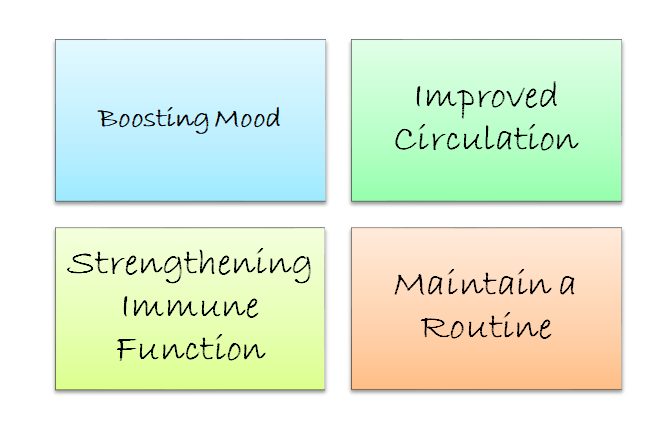
- Boosting Mood: Light exercise such as walking or stretching can help elevate your mood and provide a sense of achievement. Physical activity releases endorphins which improve overall well-being – even when we’re feeling less-than-great!
- Improved Circulation: Gentle movements may help promote better blood circulation, which could help your body in fighting off illness more efficiently as well as decrease the feelings of fatigue and stiffness.
- Strengthening Immune Function: Engaging in light activity can strengthen your immune system. Studies indicate that engaging in regular moderate exercise may reduce colds’ duration and boost your immunity more quickly, helping you recover quicker after getting sick.
- Maintain a Routine: Light exercise can be an invaluable way to keep yourself on track with your fitness goals, providing a steady dose of mental and motivational benefits throughout recovery. This consistency can also help your mental wellbeing and recovery from sickness.
What Are the Risks of Exercising When Sick?
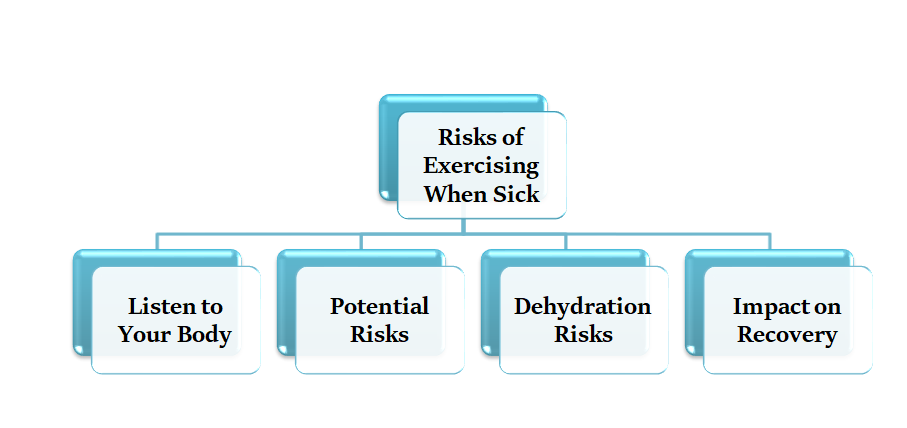
- Listen to Your Body: When exercising when ill, it’s essential to pay close attention to how your body responds. Pushing yourself too hard could worsen symptoms and lengthen recovery time, further prolonging an illness and disturbing a fitness routine.
- Potential Risks: Exercising while suffering from severe symptoms can put extra strain on the body. For instance, exercising while suffering from respiratory conditions like coughs or chest congestion could make breathing harder while potentially worsening their condition.
- Dehydration Risks: When sick, your body can become dehydrated quickly due to fever or digestive issues. Exercising further exacerbates dehydration, potentially leading to dizziness or fainting if performed while not sufficiently hydrated.
- Impact on Recovery: Overexerting yourself can hinder your healing process. If your body is busy trying to repair itself, adding stress from workouts could prolong their illness and slow your return to regular fitness regimen.
When to Skip Workout
- The “Neck Rule”: As a common guideline, one useful way of understanding when exercise may help your condition is the “Neck Rule.” If symptoms appear above your neck (such as mild cold), light exercise may be beneficial; otherwise if they are below it (such as chest cold fever or digestive problems) then not working out may be the best advice.
- Rest is Essential: Allowing yourself time for rest is critical in recovering from illness; your immune system works hard at fighting against it and adding extra strain from exercise may interfere with its efforts.
- Persistent Symptoms: If fever, chills or significant fatigue continue to appear for no apparent reason, this is an indicator that your body needs rest and cannot handle exercise at this time. Continuing with exercise could worsen your condition and slow recovery times down further.
- Seek Professional Advice: When in doubt, consult a healthcare professional. They can check your symptoms and advise whether it’s safe for you to resume physical activity.
Modifying Your Fitness Routine
- Modify Your Workouts: If you decide to exercise, consider modifying your fitness routine. Instead of intense workouts, opt for low-impact activities like walking, yoga, or gentle stretching. This allows you to stay active without overexerting yourself.
- Focus on Recovery: Incorporate recovery practices into your routine, such as proper hydration, nutrition and restful sleep to help the healing process while keeping up some level of fitness. These elements will help your body while keeping up with physical demands of training.
- Shorter Sessions: When exercising, reduce the duration of each workout session as much as possible to help alleviate fatigue while still maintaining some physical activity. This may help ensure an efficient workout while still remaining active.
- Listen to Your Body When Exercising: If any discomfort or worsening symptoms appear while exercising, stop immediately and put your health before anything else – this applies particularly if sick. Always put priority on how your body feels before beginning any workout program, particularly while sick.
Conclusion: Listen to Your Body
Should you workout when you are sick? When it comes to working out when sick, the decision depends on your symptoms and overall health. While light exercise may provide benefits when dealing with mild cold symptoms, it’s crucial that you prioritize your health first and listen to what your body tells you. Skipping your fitness routine temporarily to allow for recovery is often the best choice.
Consult a healthcare professional if you have any doubts about exercising when sick. By taking proper care for yourself, taking a break may actually strengthen and revitalize you in return; your body will thank you!
Read More: Everything You Need to Know About Working Out at Home or Gym