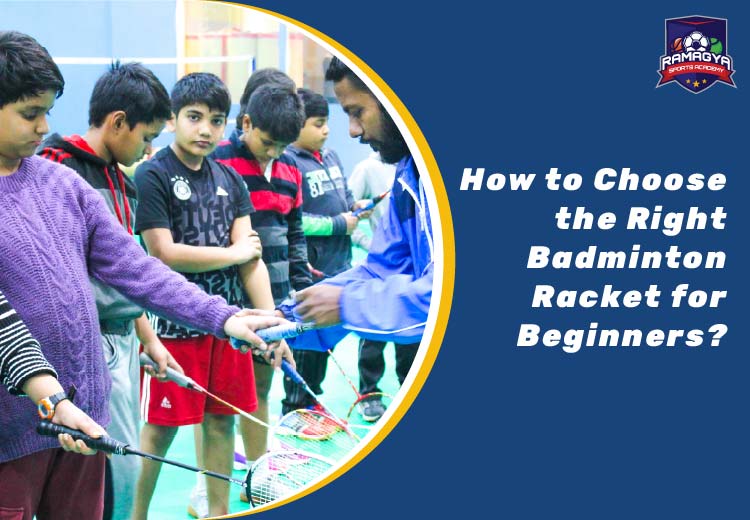
Learning badminton is fun, and once the basics are learnt, you can pick it up for fun, fitness or competition. The right equipment enhances the experience and the most crucial equipment is the racket.
Most beginners pick a racket based on price, color or brand. The right badminton racket for beginners is the one which feels comfortable in the hand and is easier to control based on the style of play.
Picking your first badminton racket can get overwhelming with the terms like weight, string tension and balance point. This guide will help you figure that out.
Why is it important?
When you are a beginner, you need to figure out the basic strokes and the movements, as well as work on the technique. With a racket that is heavy or hard to control, this becomes difficult. The right racket brings ease and confidence in your play. The positives are:
- It lessens the effort required for control
- You can learn basic strokes with the right racket
- There is less stress on your arm and wrists
- It builds confidence
In the end, it ensures your badminton journey is off to a great start, with less frustration and more enjoyment.
1. Check the Racket Weight
The first thing to consider with badminton rackets is the weight. Racket weights are designated as 3U, 4U and 5U.
| Racket type | Approx. weight | Suitable for |
| 3U | 85-89 grams | Players who like a heavier racket |
| 4U | 80-84 grams | Beginners, Balanced handling |
| 5U | 75-79 grams | Players who like a light racket |
The unstrung weights for each category are generally consistent across the rackets in that category. A 4U racket is a good starting place for beginners to badminton as it provides a decent balance for ease of movement with some control. A lighter racket is better for younger players who are still developing their badminton strokes and footwork.
Beginner tip: Swing a few rackets and see which one feels better.
2. Choose the Right Balance
Two rackets of the same weight can feel very different when swinging. This is determined by the balance point. There are three types:
Head-Heavy
More weight in the head of the racket makes it heavier in the end. Can help produce powerful smashes, but takes more effort and stamina to swing. Players who play an offensive game generally like this balance.
Head-Light
More weight in the handle making that end of the racket lighter. Easier to produce quick moves and faster strokes, more defensive style play.
Even Balance
More weight distributed evenly throughout the racket. Generally a good all round balance. Beginners should generally start with even balance to see how they like playing before moving on to other styles.
3. Pick the correct grip size
Grip size is often neglected by beginners, however it is very important. If you hold the wrong sized grip, you have very little control over the placement of your shots. Grips are labeled G4, G5 and G6, but size can vary between brands. It’s important to remember:
- You should be able to comfortably hold the handle, and it should fit well in your hand.
- You should easily be able to change your grip while playing.
- Don’t hold the racket too tightly. Use an overgrip if you need to.
An uncomfortable grip takes your mind off your shots, and you should be focusing on your game not on how you are gripping the racket.
4. Understand String Tension
String tension is how tightly the strings are fitted to the frame. It affects the feel of the shuttle when you make contact. Low string tension is more forgiving, and gives a larger sweet spot, making it easier to generate power. High string tension gives a better feel of the shuttle and makes the racket more precise.
If your technique is not clean, it becomes very unforgiving, and the shuttle will go wherever it wants. Adult beginners can start at 18-22 lbs, depending on the racket. Always stick to the string tension range given by the manufacturer.
5. Look at Material and Durability
The material determines the price, weight, flexibility and durability of a racket. Common materials are:
- Aluminium: Usually found in cheaper recreational rackets.
- Graphite: Lighter and commonly used in rackets for regular play.
- Carbon fibre composites: Lighter and stronger.
A graphite racket is a good consideration if you intend to play regularly. At Ramagya Sports Academy, beginners can learn structured badminton training to learn the basics such as racket handling, swing and footwork and the importance of using appropriate equipment.
6. Look at Flexibility
Flexibility is the amount the shaft bends when you swing. Flexibility levels are flexible, medium, and stiff. Rackets with flexible shafts allow you to generate power with a slower swing and are better suited for beginners. The best flexibility level for you depends on your natural swing.
7. Set a Budget
Beginners don’t need to buy the most expensive professional racket to start playing. Some of the cheaper rackets provide comfort and performance and are good to start with. Before buying think about:
- How regular will you play?
- How good value for money is it?
- Is it the right racket for your current level?
- Is it comfortable?
Don’t focus only on the price. A racket that is comfortable to use is better than an expensive one that isn’t.
8. Common Mistakes
- It’s easy to get overwhelmed by all the options when buying your first racket. The following are common mistakes made by beginners.
- Buying based on Branda: Just because a company is popular, doesn’t mean their products will be a good fit for you.
- Buying a Heavy Racket: It will be difficult for you to quickly switch between different strokes.
- Ignoring Grip Size: If your grip size is not correct, it will affect how easily you can handle the racket.
- Using High String Tension: It makes basic shots more difficult to learn.
- Copying Pros: It will be very difficult to use the same shots as them because they use advanced techniques.
- Not Testing: It will help you determine how comfortable a racket is.
9. Testing a Racket Before Buying
It’s ideal to test a racket before buying, but it’s not always possible. You won’t need to play a full match to test a racket. Simple checks will be sufficient. Just see if the grip feels comfortable to you and if you are able to easily swing the racket and move it in different directions. You can even try taking a few strokes. You should compare between 2 or 3 rackets.
If you are taking badminton classes for beginners, ask your coach before buying. He/She can tell you what specification will be best for you.
Conclusion
It can be a little overwhelming to buy your first badminton racket. But the basics are relatively simple. There is weight balance. Grip size and string tension affect how stiff the racket is. The more flexible the racket, the easier it is to control.
An expensive racket won’t necessarily help your game. The important thing is to find something comfortable, easy to control and something you can use regularly for practice.
Of course, the right badminton racket helps but regular practice and proper training are just as important.
At the Ramagya Sports Academy, budding players can train in badminton and use the world class facilities. This will help improve your game. If you are a beginner this might help you take the first step towards your badminton goals.
Frequently Asked Questions (FAQs)
1. Which badminton racket is best for beginners?
An even balance racket is usually best. It helps while practising different shots. A flexible shaft is also better as it is easier to control.
2. Is a lightweight racket better for beginners?
It can be easier to move a light racket, but you also want a racket that feels balanced. Don’t just go with the lightest one.
3. What is the ideal string tension for beginners?
For adults, beginner tension is usually between 18-22 lbs. It is also important to consider your comfort and preference.
4. Should beginners choose graphite or aluminum rackets?
Graphite or aluminum can work. Graphite is usually better for training. Aluminum can be better for beginners because it is cheaper.
5. How do I know if a racket is right for me?
You should be able to swing the racket easily, without feeling like you are adding effort when trying to do a stroke. Rackets should be comfortable to hold. It is a good idea to try different ones. You can also ask your badminton coach to help you figure it out.