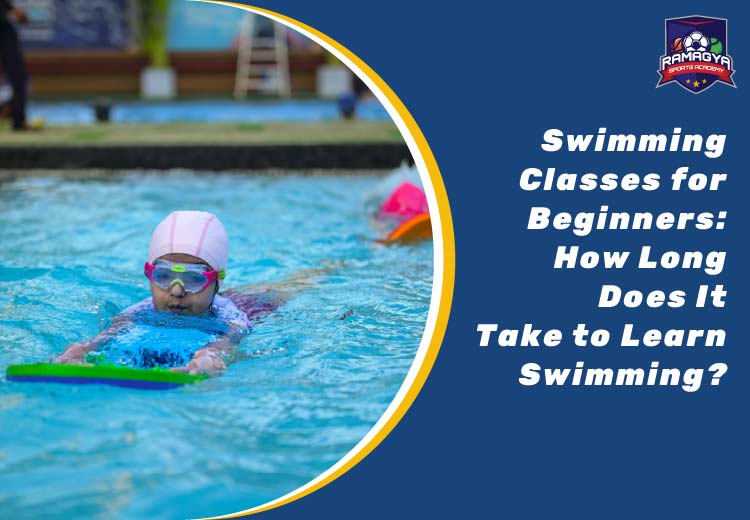
A major concern of every individual who is interested in learning swimming is “how long will it take?”.
Every swimming class for beginners has their own way of teaching, and it depends on the individual as well. Most individuals learn to float and move in water within 3 to 4 sessions. The remaining things come with more practice. Comfort levels and confidence levels in water differ from individual to individual.
Many children (and adults, too) wish to learn swimming. The most frequently asked question before taking swimming classes is: “will one month of swimming classes be enough?” Let us consider expectations regarding this.
How many days will it take to learn to swim?
Picking up swimming strokes takes 15 to 20 sessions (approx. one month). But learning to swim to an extent that you feel comfortable swimming on your own takes around three months (and possibly more).
This is just a general guide of what you could learn each week:
| Duration | What you may learn |
| First week | Comfort in water. Learning to breathe. Basic floating |
| 2-3 weeks | Kicking and floating with support and some basic arm movements. |
| 4-6 weeks | Putting together the skills learnt previously. |
| 6-8 weeks | Able to swim short distances with help. |
| 2-3 months | Improved stamina and coordination. |
| 3-6 months | Improved technique and learning new strokes. |
What Affects How Quickly You Learn Swimming?
Everyone learns at a different speed. A few things make a difference.
1. Age
Both kids and adults can learn swimming well, but the experience is different. Young kids learn through games and play, while adults often prefer clear instructions. Age alone doesn’t decide the speed. Comfort, confidence and regular practice matter just as much.
2. Fear of Water
Are you nervous about getting into the pool? Many beginners are. Some worry about floating, putting their face underwater or losing balance. A trained instructor can help with slow and proper instructions.
3. How Often You Attend Classes
Someone who attends class three times a week will generally be able to progress at a quicker rate than someone who attends once every two weeks. For beginners, a manageable routine would be to attend two to three classes a week.
4. Quality of Instruction
Good teachers don’t just tell you to go and practice swimming. They help you to build your skills by covering the following in a progressive manner:
- Breath control
- Floating
- Kicking
- Arm coordination
- Body position
- Water safety
5. Your Own Learning Speed
Some people will naturally pick up floating quickly while others take longer. Everyone is at a different place when they begin and swimming isn’t a race.
What Do You Learn in Swimming Classes for Beginners?
Because you may have no experience taking swimming lessons, you might be curious about what goes on during the first few classes. The best swimming class for beginners has programs geared towards beginners who are usually slow to present new skills.
Let’s take a look at steps for leaning swimming:
1. Getting comfortable in water
The first few sessions are about feeling at ease in the pool. You may walk in shallow water, practise breathing and learn the pool safety rules.
2. Learning to float
Floating is one of the basic skills. You learn how to position your body and stay relaxed while the instructor supports you. It helps you understand how your body behaves in water.
3. Kicking
When you feel comfortable floating, you start to work on kicking and see how your legs help you move.
4. Arm movements
Next you work on the basics of arm movements and see how arms and legs work together, and you make it better with consistency and practice.
5. Breathing
Practice moving your legs and arms while breathing. This is where beginners have the most trouble but with constant practice it eventually starts to feel natural.
6. Swimming short distances
With the basics down, you work on swimming short distances while focusing on technique and comfortable breathing, all with the goal of improving control.
Can You Learn Swimming in 30 Days?
Yes, it is possible for beginners to learn some swimming movements in a month if they attend classes regularly. But learning to do all this and also becoming confident about swimming are two different things. In a month, you may learn:
- To float better
- To practice basic breathing
- To do simple kicks
- To make basic arm movements
- To swim a short distance with supervision
Some people may take more than a month to learn to do all this and still need to swim under supervision. Visit Ramagya Art Academy, and take practical classes to clear this curiosity.
FAQs
1. How long will it take to learn swimming if I’m a complete beginner?
Between 2 to 4 weeks is the time frame for most beginners to learn floating, kicking and practicing the breathing stroke. Swimming short distances on your own may take 1 to 3 months or more, depending on the person.
2. Will I be able to learn swimming in 15 days?
If you are okay with learning techniques for survival in deep waters, you can learn in 15 days. If your aim is to learn short distance swimming, it will definitely take more than 15 days.
You can learn to float and kick in 15 days, but developing the confidence in swimming takes continued effort and practice.
3. How many days a week should beginners attend swimming classes?
Beginners can attend from two to three times a week. Factors determining the right schedule includes the individual’s age, level of fitness and the instructor’s recommendation.
4. Is it easier for children or adults to learn swimming?
Learning to swim isn’t necessarily easier for children or adults. Having the right teacher combined with continued practice builds confidence to swim and is more beneficial than age.
5. What is the best age to start swimming classes?
Many swim programs start with children around the age of four; however, readiness is determined by individual development. Adults can learn to swim at any age.