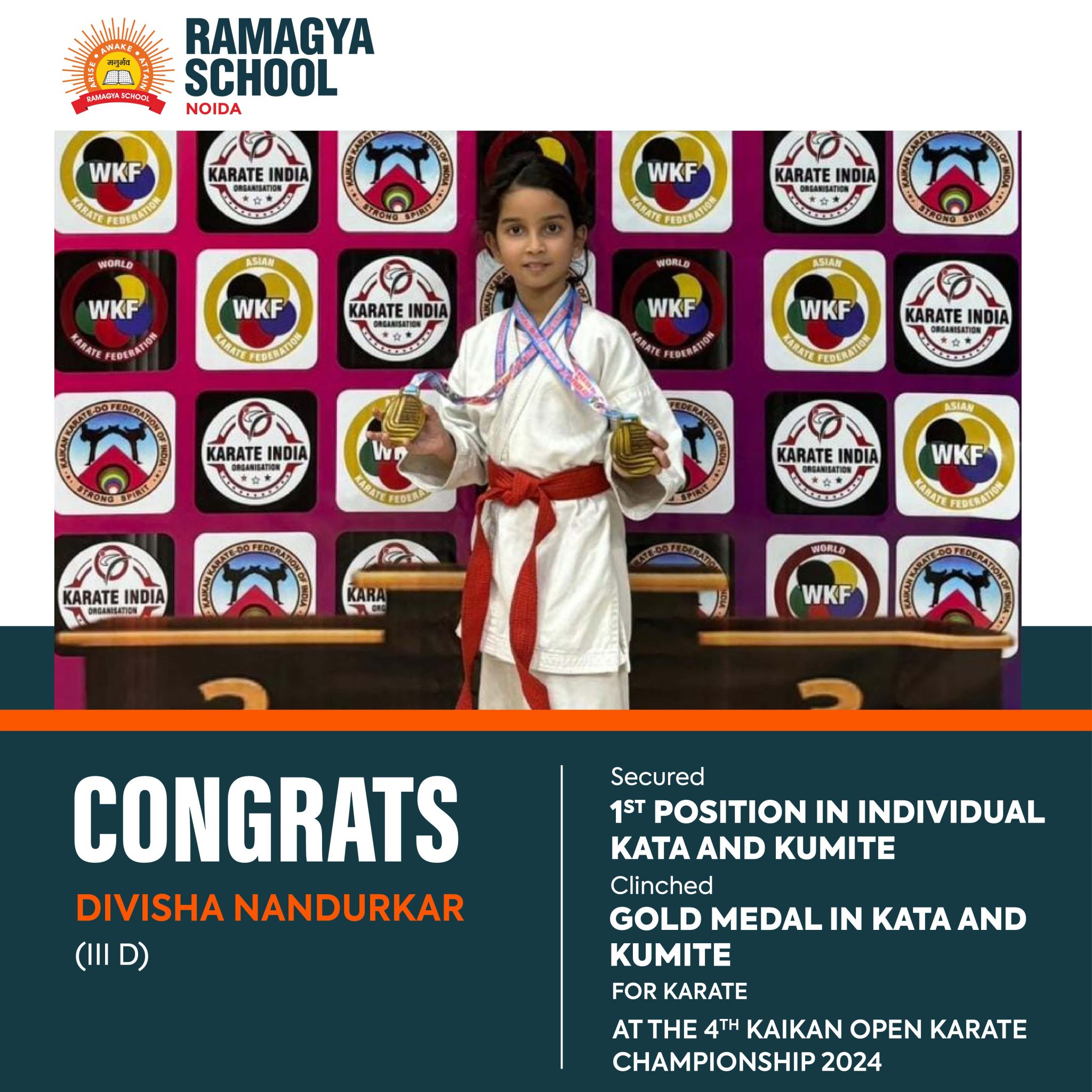
We are proud to announce that Divisha Nandurkar of Class 3D has achieved an incredible milestone at the 4th Kaikan Open Karate Championship 2024, held at Rise Sport School, Noida. Competing in the Sub-Junior category, she claimed gold in Individual Kata and gold in Individual Kumite, securing first place in both events.
Divisha’s exceptional talent, focus, and determination have set a benchmark of excellence for young athletes. Her achievement not only highlights her dedication but also inspires her peers to strive for greatness.
Congratulations, Divisha, on this phenomenal success! Your hard work has truly paid off. We look forward to many more victories in the future!
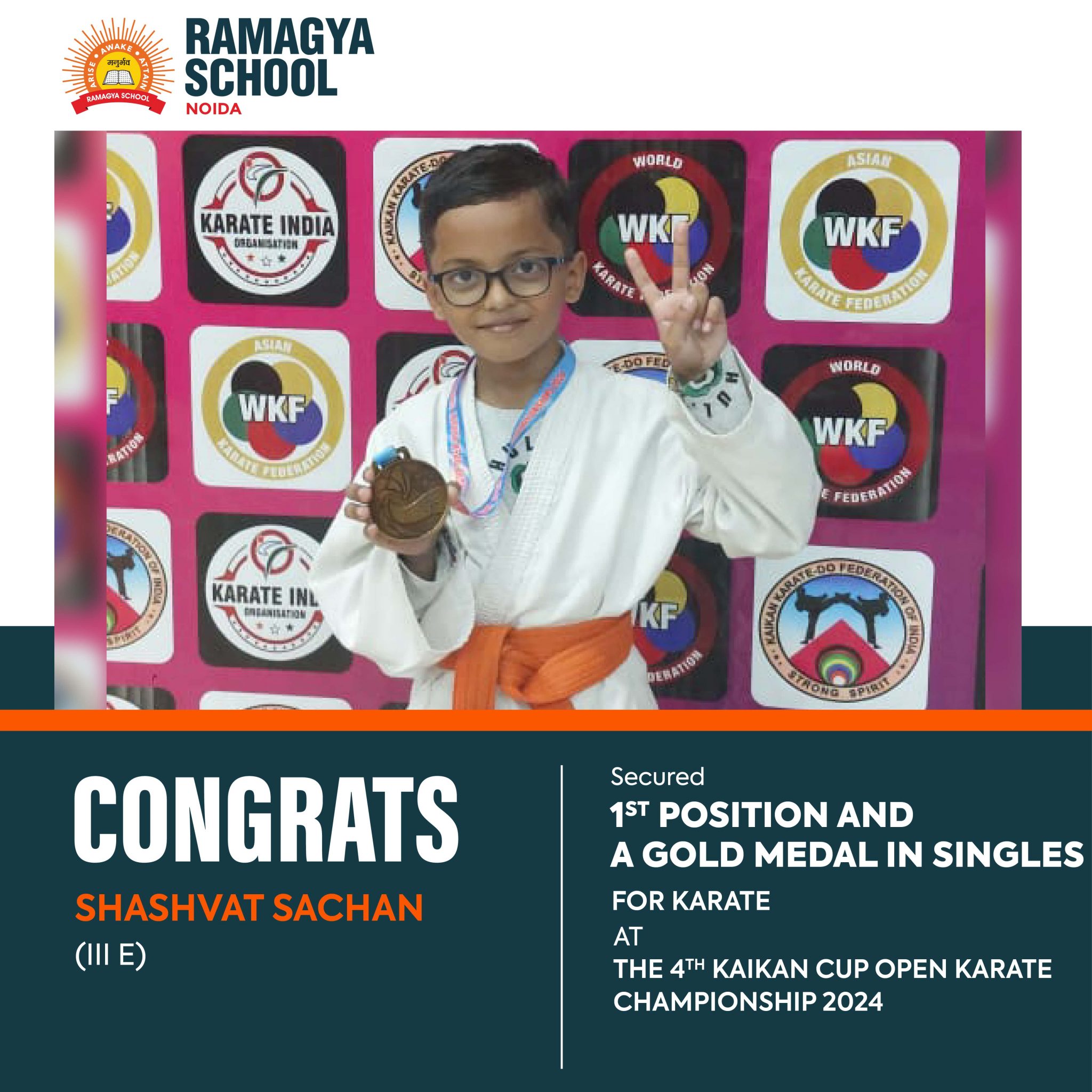
We are delighted to celebrate the remarkable achievement of Shashvat Sachan from Class 3E, who secured the gold medal in the Under-7 Boys category at the 4th Kaikan Cup Open Karate Championship 2024, held at Rise Sports School, Noida.
Competing in the singles event, Shashvat’s outstanding performance earned him 1st place, showcasing his exceptional talent, dedication, and discipline.
His success not only makes us proud but also inspires his peers to pursue excellence with the same determination.
Congratulations, Shashvat, on this outstanding accomplishment! Keep shining!
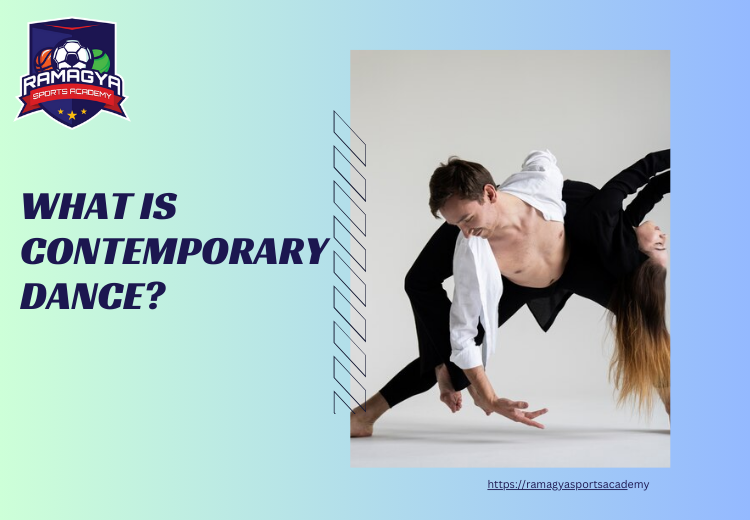
Contemporary dance is a unique form that blends various movements and techniques into an expressive performance, emphasizing emotions and ideas through movement. As opposed to more traditional forms, contemporary dance allows dancers to explore more freely their bodies and the space around them, including ballet, jazz, and modern dance, contemporary dance is highly versatile.
Contemporary dance is highly adaptable and improvisatory techniques from each of these genres make each performance special and engage the audience while conveying stories and emotions through movement and inviting viewers to interpret and respond to its art as they see fit.
The Origins of Contemporary Dance
Contemporary dance first emerged as a movement within dance during the early 20th century as a reaction against more classical forms, specifically ballet. While ballet relied heavily on strict technique, contemporary dance allowed for greater freedom of movement and personal expression through personal expression through dance. Contemporary dance emerged due to pioneering choreographers exploring new ways of moving and telling stories through dance.
Isadora Duncan was one of the early innovators of contemporary dance. She believed dance should reflect natural body movements rather than rigid poses. She advocated fluidity and grace drawn from nature and everyday life as sources of inspiration. Martha Graham introduced dance as an expressive means to convey emotions and narratives by emphasizing natural body movements to communicate deeper feelings.
Contemporary Dance Today
Contemporary dance has never been more prevalent, appearing at theaters, dance festivals and public spaces alike. Dancers trained in various styles bring their unique voices to the art form while choreographers push boundaries by exploring themes, technologies and movement possibilities that open new horizons for choreographers and their dancers alike.
Dance companies around the world showcase contemporary works, often collaborating with artists from different disciplines, such as theater, music, and visual arts. This interdisciplinary approach enriches the experience for both performers and audiences, creating innovative and thought-provoking performances.
A Fusion of Styles: The Eclectic Tapestry of Contemporary Dance
Contemporary dance is an exhilarating mix of different forms of movement that include ballet, jazz and modern dance components. This eclectic tapestry creates an exciting, dynamic art that allows dancers to transcend traditional boundaries while exploring new possibilities that come alive through movement. As opposed to classical ballet which can often be rigid in terms of technique and interpretation, contemporary dance is more flexible, celebrating creativity while providing dancers an outlet to demonstrate imagination through varied moves as well as gestures.
The Power of Improvisation: Embracing Spontaneity in Contemporary Dance
Contemporary dance stands out as being unique because of its emphasis on improvisational techniques. Improvisation accelerates every performance with spontaneity and emotional depth, in stark contrast with choreographed routines of other dance forms. Contemporary dancers frequently participate in improvised patterns which allow them to respond instinctively to music, exploring depth of artistic inclinations while creating an air of uncertainty among audiences with spontaneity of dancers and freedom of expression.
Embodying Narrative Through Movement: The Expressive Potential of Contemporary Dance
Dance is an effective means of storytelling, enabling dancers to convey stories while stirring emotions through movement. Combining movements, spatial dynamics and theatrical elements with dance performances, contemporary dancers bring abstract concepts and emotional issues alive for viewers through movement – whether it’s the loss of love or reflection on social issues; contemporary dancing allows audiences to engage emotionally in an experience through dance. Dancing in the present can also provide an effective means of conveying human emotion without words to make an emotional statement that resonates.
The Evolution of Contemporary Dance Steps: Innovations and Boundless Creativity
Contemporary dancers’ step dance repertoire can be identified by its constant evolution as choreographers and dancers search for innovative ways to convey their ideas through dance. Ranging from delicate floor movements to rapid turns and leaps, contemporary dance steps showcase its infinite imagination and creativity inherent in this form of art. Dancers add personal interpretations into every move they perform bringing life and emotion to each performance they deliver.
Conclusion
At the conclusion of our lessons in contemporary dance steps, we hope that you have gained an increased awareness of its many artistic qualities. You may be inspired to begin dancing or simply marveled by its beauty. Contemporary dance steps provide us with endless opportunities for expression through art while honoring body language as a form of communication.
Let the stunning, mesmerizing beauty of contemporary dance inspire your imagination and awaken your senses as you immerse yourself in its dynamic world of expression and enthusiasm!
Frequently Asked Questions:
Is contemporary dance good for beginners?
Yes! Contemporary dance is great for beginners. Many dance classes offer lessons for all skill levels, focusing on basic movements and encouraging creativity.
How does contemporary dance promote physical fitness in children?
Contemporary dance involves various movements that enhance strength, flexibility, coordination, and endurance. Regular participation helps kids stay active and healthy.
Can contemporary dance improve social skills in children?
Yes! Dance classes encourage collaboration and teamwork, helping kids build friendships and develop important social skills.
Why is contemporary dance important for kids?
Contemporary dance is important for kids because it encourages creativity, confidence, and self-expression. It’s a fun way for them to explore their feelings and connect with others through movement.
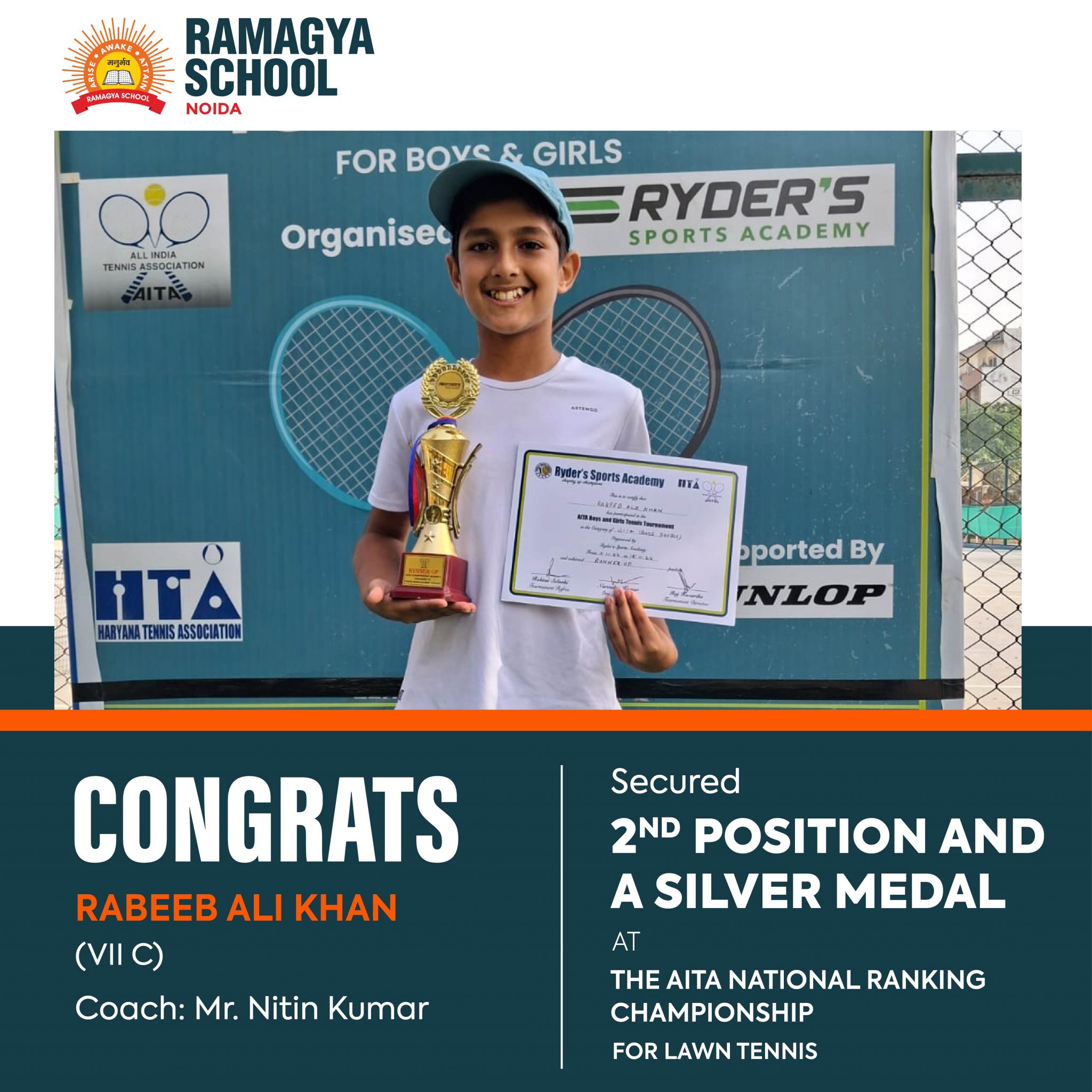
We are proud to announce that Rabeeb Ali Khan, a 7th-grade student from Section C, has achieved remarkable success by securing 2nd place and winning a silver medal at the AITA National Ranking Championship. Competing in the U-14 Boys Doubles category at Ryders Sports Academy in Gurugram, Rabeeb demonstrated exceptional skill and determination throughout the tournament.
His performance reflects not only his talent but also the hard work and dedication he has put into his training. We extend our heartfelt congratulations to Coach Nitin for his guidance and support, which have been instrumental in Rabeeb’s achievement.
This accomplishment serves as an inspiration to all our students to pursue their passions and strive for excellence in their respective fields.
Why is Flexibility Important for Strength as we Age?
As we age the need to maintain our physical health is becoming more important. One key aspect to staying healthy is being flexible. Many people believe that strength is about lifting weights or performing intense workouts, but flexibility plays an important role in keeping you strong, especially when we get older.
Being aware of the importance of flexibility will help us in staying active, avoid injuries and enhance the overall quality of life.
1. Importance of Flexibility for Aging Bodies
Flexibility refers to the capacity of joints and muscles to move freely through their entire movement. As we get older, our muscles become tighter and joints stiffen. This can make it difficult to complete simple actions like bending backwards or reaching for something or even walking with ease. When our bodies become less flexible it is more prone to suffer from joint pain, muscle strains or even slips.
By focusing on the importance of flexibility, we can maintain the strength to move easily and freely. Flexibility helps muscles to remain in a relaxed state and reduces the risk of injury. It also helps in maintaining a proper position, important for stability and balance which makes it easier to carry out every day tasks.
2. Flexibility and Strength: How They Work Together
A lot of people don’t know how much flexibility is connected to strength. If we don’t have enough flexibility, it is difficult for our muscles to work correctly. When muscles are tight they’re less efficient, which can cause muscle imbalances, and can make certain workouts more demanding.
For example, if your hamstrings have tightness, then you might be unable to lift weights, or even walk far distances without discomfort. Concentrating on exercises that improve flexibility for seniors will ensure that the muscles are flexible and strong. This will allow for greater fitness development as muscles are able to move more efficiently when exercising. When you incorporate stretching exercises into your workout routine it helps your body remain active and able to handle diverse physical tasks as you get older.
3. Benefits of Flexibility Exercises for Seniors
Improved Range of Motion: As we get older, our joints and muscles tend to get less flexible. The exercises allow flexibility to keep them in motion and allow you to carry out everyday tasks such as lifting, and bending without stiffness or pain.
Prevents Injuries: The muscles that are tighter are more susceptible to injuries. If you include stretching exercises into your daily routine to reduce the chances of strains, sprains as well as muscle tear. This is crucial for those who are more vulnerable to falls or other incidents.
Better Posture: Poor posture can cause neck pain, back pain, or even headaches. Exercises to improve flexibility can help improve posture by ensuring your spine’s muscles remain balanced and sturdy.
Increased Circulation: Stretching and flexibility exercises increase blood flow to your joints and muscles, which helps in recovery and reduces soreness in the muscles. This is especially beneficial following the training for strength or any other exercise.
Reduced Tension and Stress: Exercises for flexibility like gentle stretching or yoga, can calm your mind and decrease tension within the body. This could lead to less muscle tension, better relaxation, and better sleeping.
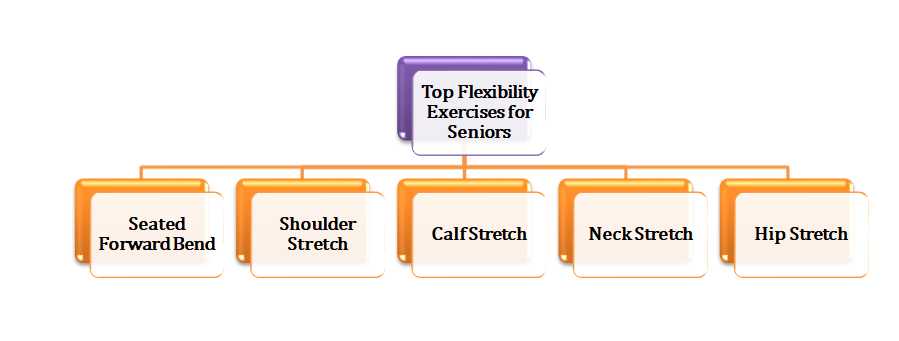
4. Top Flexibility Exercises for Seniors
If you’re looking for ways to improve your flexibility and remain healthy, here are simple exercise routines for seniors that can be performed at the home or in an exercise routine. These exercises are easy and can be adapted according to the level of fitness.
Seated Forward Bend: Sit in the chair, with your feet laid flat on the floor. Slowly bend your hips forward by extending your hands towards your feet. Maintain this position for 10 to 15 seconds, and then sit back up. This stretch improves the flexibility of your back & the hamstrings.
Shoulder Stretch: Sit or stand upright. Spread an arm in front of your chest. Use the other hand to gently draw the arm closer to your body. Keep it for 10 to 15 seconds, and then switch arms. This stretch helps improve shoulder mobility, and also helps to prevent stiffness.
Calf Stretch: Sit in front of a wall and place your arms resting on the wall to provide support. Move one foot backwards while keeping your heel on the floor. Lean forward until you notice the calf muscle. Do this for about 10 seconds before switching legs. This is a great stretch to increase the flexibility of your lower legs.
Neck Stretch: Sit or stand tall. Slowly move your head towards one side, and bring your ear to your shoulder. For 10-15 seconds, and then switch sides. This stretch relieves tension in the shoulders and neck.
Hip Stretch: Place yourself in a chair and cross one leg over the other knee. Then, gently press on the knee you crossed while leaning forward a bit. Keep it for about 10 minutes and then switch the legs. This stretch can help improve hip flexibility which is necessary for balance and walking.
5. Integrating Flexibility Exercises into the Daily Routine
It’s crucial to make stretching exercises a regular element of your exercise routine. For those who are older it doesn’t need to be a time-consuming exercise. A couple of minutes of stretching everyday can create a huge change. When you are doing exercises for flexibility for seniors, it’s important to do it slowly and with care. Be careful not to push yourself too hard in order to avoid causing injuries. Instead, concentrate on a steady pace and pay attention to the signals of your body.
Conclusion
It is vital to be flexible and can’t be overemphasized, particularly when we get older. Being flexible can improve balance, strength and general mobility. When you incorporate flexibility exercises for seniors in the routine, you will lower the chance of injury and maintain a healthy posture and enjoy living an active life.
Flexibility and strength go hand in hand and make it much easier to complete daily tasks and stay independent as you age. Start today and you’ll soon see the benefits of incorporating flexibility exercises into your life.
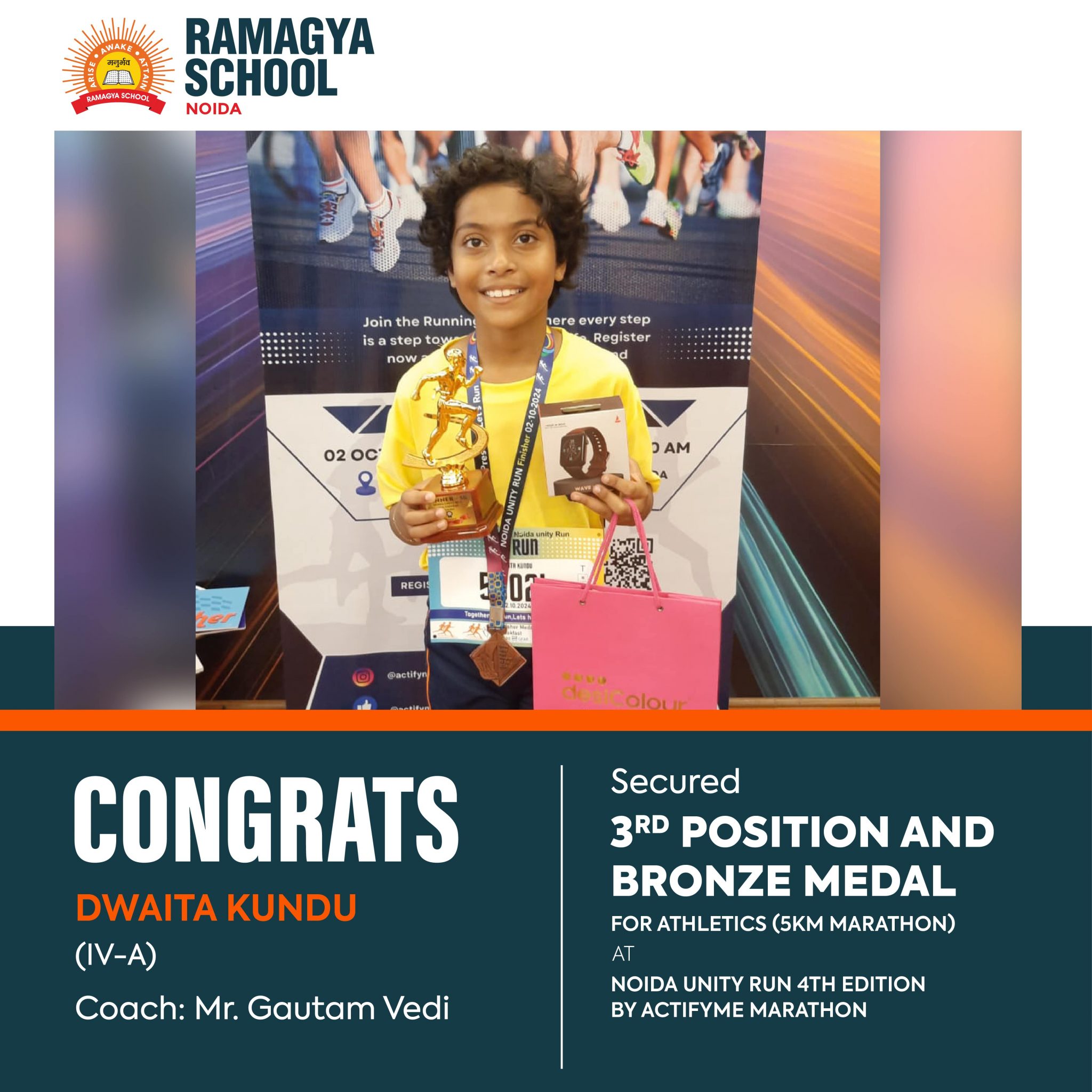
We are proud to celebrate the remarkable achievement of Dwaita Kundu, a student from Class 4A, who secured the 3rd position and a bronze medal in the 5km marathon at the Noida Unity Run 4th Edition, organized by ActifyMe.
Competing in the U-10 Girls category, Dwaita displayed exceptional talent and perseverance, earning a well-deserved bronze medal. Her performance reflects not only her determination but also the quality of training and guidance she has received.
Special thanks to Coach Gautam Vedi for his continuous support in helping Dwaita reach this milestone. This accomplishment is a testament to her hard work and dedication.
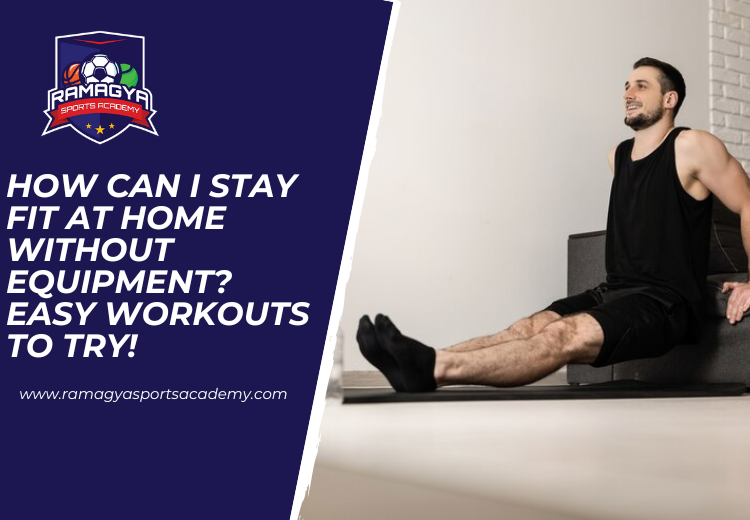
How can I Stay Fit at Home Without Equipment? Easy Workouts to Try!
Being fit doesn’t have to mean attending a gym or investing in expensive equipment. It is possible to keep in shape by doing simple exercises that do not require any particular equipment. A full-body workout that doesn’t require equipment is as effective as exercising in the gym. In this blog, we’ll discuss some simple exercises at home that you could attempt and teach you how to keep fit using exercises that don’t require equipment.
Why a No Equipment Workout is Great for You
A no equipment workout offers many benefits. You can exercise whenever you want without having to purchase and store equipment. It’s ideal for those who do not want to visit the gym or are in a hurry. The full-body exercise with no equipment routine lets you work out all the major muscle groups with just your own weight. This makes it simple to do your own workout at home and it is efficient in helping you improve your strength, burn off fat and increase flexibility.
Full Body Workout No Equipment: A Simple Guide
A full-body workout that doesn’t require equipment is when you’ll use your body for resistance in the exercises. The great thing is, these exercises target a variety of muscles, providing an even workout. Here’s how to get started with a no equipment workout at home:
1. Squats
Squats are an easy exercise at home that works your legs, glutes, and core. Start by standing with your feet about shoulder width apart then lower yourself as if you were sitting down in your chair. Keep your spine straight. Then, rise up. Repeat for 10-15 reps. This full-body workout with no equipment moves improves your lower body strength and can help improve your balance.
2. Push-ups
Push-ups are an all-time classic no equipment exercise which targets your chest, shoulders, triceps, as well as your core. Begin in a plank position and place your hands spread out shoulder-width apart. Reduce your weight until the chest is level with the floor, and then push yourself up. If you find this difficult then you can alter the exercise by performing push-ups with your knees. Do 10-12 repetitions.
3. Lunges
Lunges are a good exercise that will work your legs and your core. Standing up begins by taking one step forward, then bring your body down until your knees are bent to 90-degree angles. Return to your starting position then switch your legs. Lunges are a great exercise for the whole body, no equipment required that increases strength and flexibility. Try to do 10 reps per leg.
4. Plank
The plank is an incredible fitness exercise that does not require equipment to strengthen your shoulders, back and arms. For a plank, begin by putting your body in a position of push-ups but keep your body straight all the way from toe to head and not moving. Make sure your abs are tight and keep your body in a straight line for 20-30 seconds minimum. This easy exercise at home helps strengthen your core and improve your posture.
5. Glute Bridges
Glute bridges are great to target your glutes, lower back and the hamstrings. Lay on your back, and bend your knees, and your feet firmly to the ground. Your hips should be lifted towards the ceiling, pressing your glutes on the highest point, then lower back to. This full-body exercise that requires no equipment is ideal to strengthen the lower part of your body. Do 12 to 15 repetitions.
Benefits of a Full Body Workout No Equipment Routine
A workout that does not require equipment is not just practical but also has a host of advantages. Here are a few of the reasons to try it:
Saves time: There is no need to go for a gym visit or set up any equipment. You can start anytime and from anywhere.
Cost-effective: There is no need to buy expensive equipment or gear.
Effective: A full-body exercise that doesn’t require equipment will strengthen muscles, increase endurance, and reduce calories.
Customizable: You can pick exercises that are suitable for your fitness level and objectives which makes it simple to maintain.
Staying Motivated with No Equipment Workouts
It’s easy for people to get lost in the moment or lose focus while working at home, but here are some suggestions to keep you focused:
Set a timer: Select specific times during the day when you can do your workout without equipment. Following a plan makes it much easier to keep your commitment.
Track your Progress: Note down your workouts and record the number of reps you’re performing or the length you can hold in a plank. This will allow you to see the progress you’ve made as time passes.
Finding a Workout Buddy: Exercise with a loved one or a family member can help you stay active and make the exercise more enjoyable.
Conclusion
Maintaining your fitness at home without equipment is achievable by following this full body workout no equipment. Through simple exercises that you can do at home such as squats, lunges, push-ups, and planks, you can achieve an effective workout routine. The no equipment workout will be incorporated into your routine as it is cost-effective and will work all major muscles of your body. Try it and you’ll discover how simple it is to keep in shape with a full body exercise routine that requires no equipment!
Our Football team has made us incredibly proud by securing 3rd place and winning the Bronze Medal at the SFA Football Championship. The competition took place at the renowned Jawaharlal Nehru Stadium, and the team’s performance was nothing short of outstanding.
Under the expert coaching of Coach Suraj, the players demonstrated exceptional teamwork, skill, and determination throughout the tournament. Their hard work and commitment led them to a well-earned podium finish, showcasing their resilience and sportsmanship.
A huge congratulations to the following players for their remarkable contribution:
Vihaan Suri (6D)
Daksh Kumar (6D)
Parth Nayal (6F)
Sagar Garg (6E)
Daivik Prabhakar (6C)
Shayan Singh (5B)
Saurabh Jha (7B)
Prashast Rai (5E)
Anmol Tyagi (5E)
Arnav Singh (5E)
Aryan Gupta (7C)
Liban Khan (6C)
This victory is a testament to their dedication, teamwork, and the spirit of sportsmanship. Keep shining, champions!
Naitik Sah, a talented young footballer from 5th Pacific, came out as the winner of the JBM AAHWAN Tournament in the Under 13 category. The event took place from October 22 to 26 at JBM Global School in Noida, where Naitik played as a Left Back.
His team competed against 32 teams and demonstrated exceptional skills, teamwork, and dedication to secure the top position. His achievement not only brings pride to his school but also sets a great example for other young athletes. We look forward to seeing more of Naitik’s success in the future, as he continues to shine in the world of football.